Harlequin Ladybird Metamorphosis.
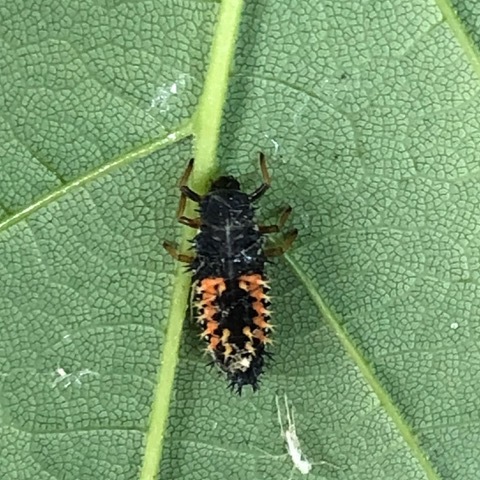
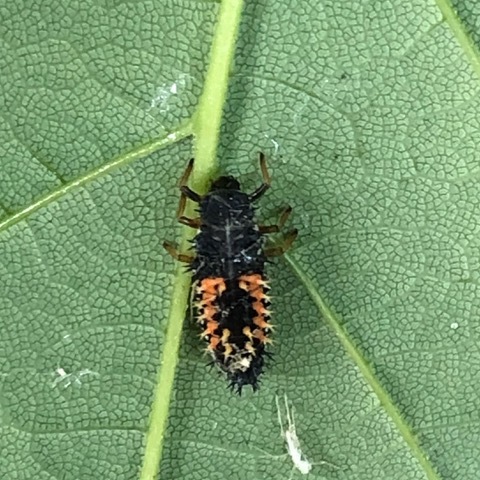
Whilst looking for insects on Sycamore leaves in a local garden, on the 21st of May 2025, I came across this 4th instar harlequin ladybird larva. Figure 1 .
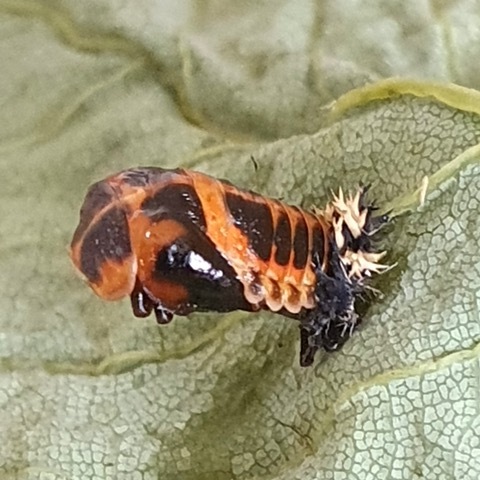
On closer examination there were numerous other larvae , one pale yellow and orange pupa. Figure 2 left and several black and orange pupae Figure 3 right.

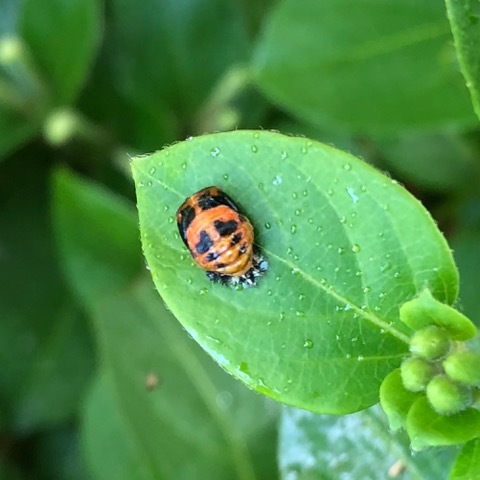
On referring to Ladybird Metamorphosis on the Wildlife Macro website, I discovered that the earliest stage of a harlequin pupa is yellow with orange markings as in Figure 2 and over a short period of time ( hours ) the colouration changes to bright orange and black as in Figure 3. Reading about metamorphosis gave me the idea to try to So on the 25th of May I returned to the same sycamore tree where there were still several 4th instar larvae and several pupa. I collected 2 pupa and three larvae at 9.20 am with the intention of trying to photograph the development of a pupa from a 4th instar larva and an adult emerging from a pupa. My first mistake was not monitoring the larva closely because when I went back to examine the larvae, one of them was already in the first stages of metamorphosis ie it was contracting its body and starting to assume a dome shape, and another one had already pupated. I realised that to observe the changes in one larva was going to be too difficult so I decided to record as many stages as possible using a number of pupae. Here are the stages I recorded. photograph major stages in metamorphosis.
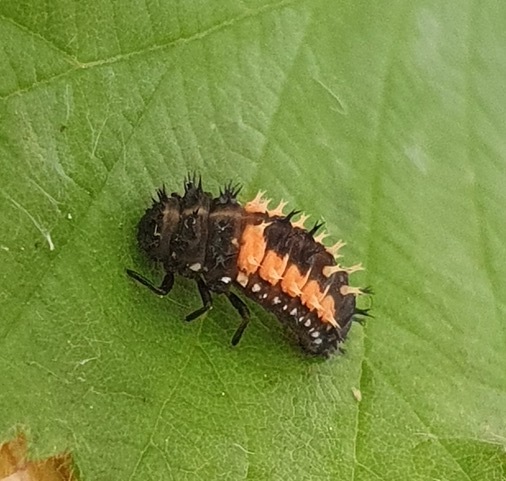
Stage 1: Below left: 4th instar larvae predator which moves around freely feeding on aphids and other soft bodied insects including other ladybird larvae. Larvae stop feeding at least 24 hours before pupation.
Stage 2: Below right: Pre-pupal stage. Larva attaches itself to the substrate with a sticky substance which is exuded from its abdomen and its body assumes a dome shape. Duration varies according to ambient temperature.
Stage 3: Left :The larva pupates and initially is pale yellow with orange markings. You can still see the remains of the larva at the point of attachment.
Stage 4A: Right The pupal case is transformed over a short time to black and red. At this stage the pupae are not completely mobile. If they are irritated the fore region is rapidly raised and lowered several times.


Stage 4B & C : Pupa in vertical position, from the side and underneath.
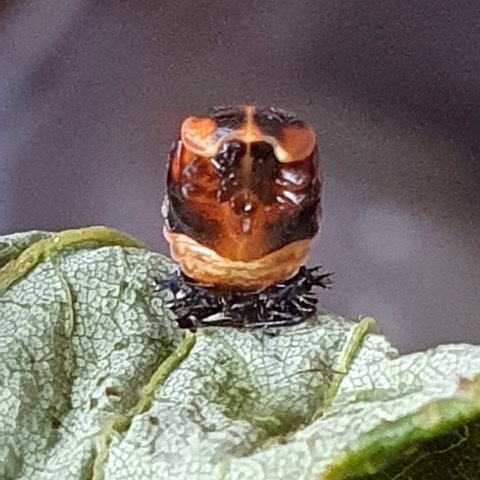
Looking at the underside of the pupa, you can already see what will become the pronatum. When the pupa lies horizontally the head is tucked under, safe from view. The back spiky base from which the pupa appears to be sprouting from is what’s left of the larval body.
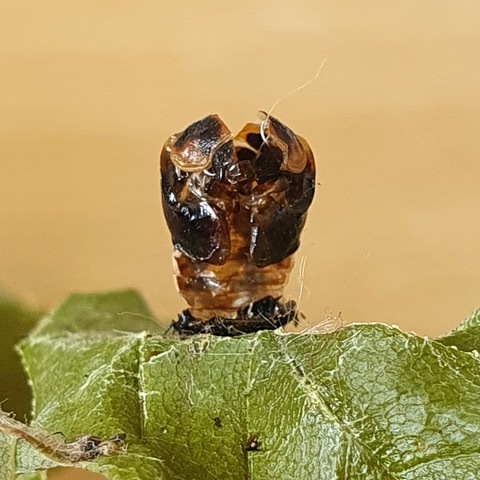
Stage 5: The front end of the pupal case splits and the adult ladybird takes a few minutes to pull itself out. Sometimes it rests on the pupa for a short time. Left: View of underneath Right: View of upper surface

Stage6A Left 8.05 and Stage6B.Right 8.08 A newly emerged ladybird with pale elytra containing very little pigment. The wings are extended whilst they are drying out. This is the teneral stage occurring immediately after emergence from the pupa, before the hardening and darkening of the cuticle.
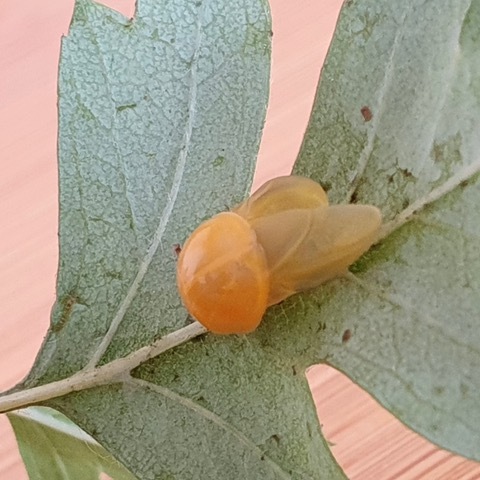

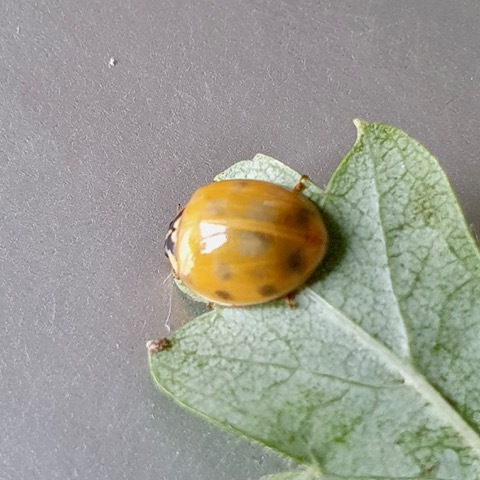
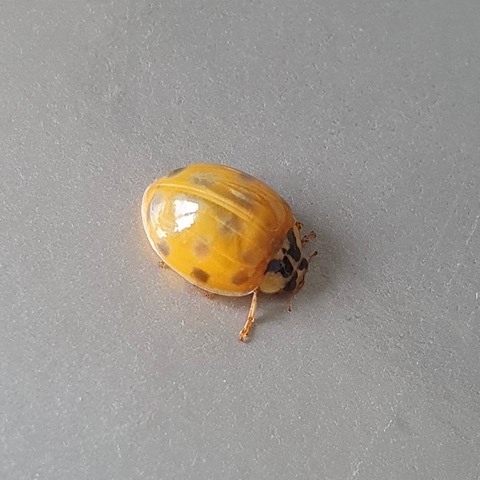
Stage6C. Left 8.08 Stage6D right 9.01 53 mins after Stage6C Blood is pumped into the elytra and wings to expand them and the colour patterns develop over the first few hours of the adult’s life. In the photograph on the right you can see the black spots beginning to develop.
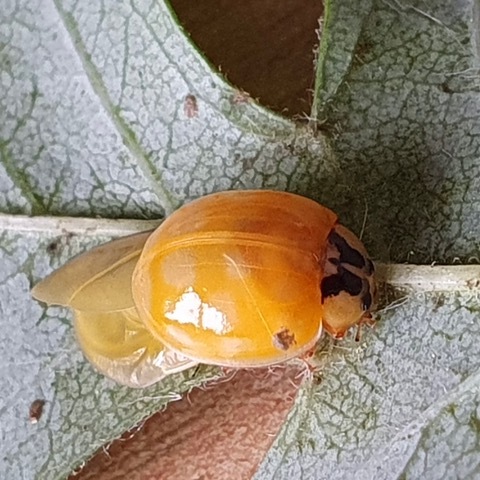

Stage6E. Left 9.19 Stage 6F 9.25 The black spots continue to darken. 6F is the last photograph taken in this series, 1 hr and 20 mins after the first.
To be continued!
Nora Boyle