10/01/25.
Fieldfares.
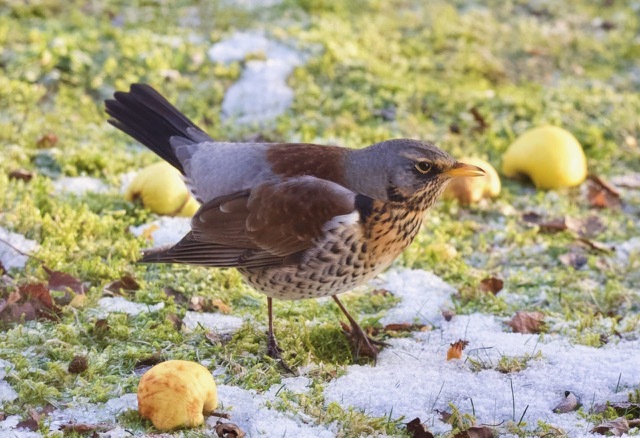
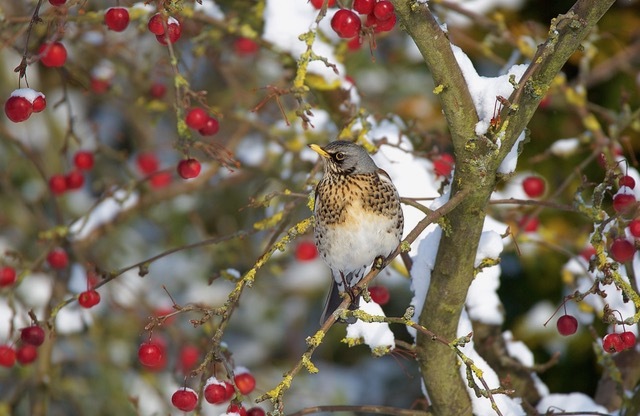
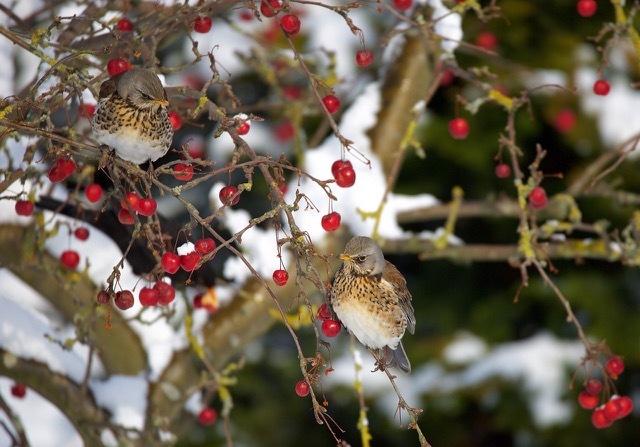
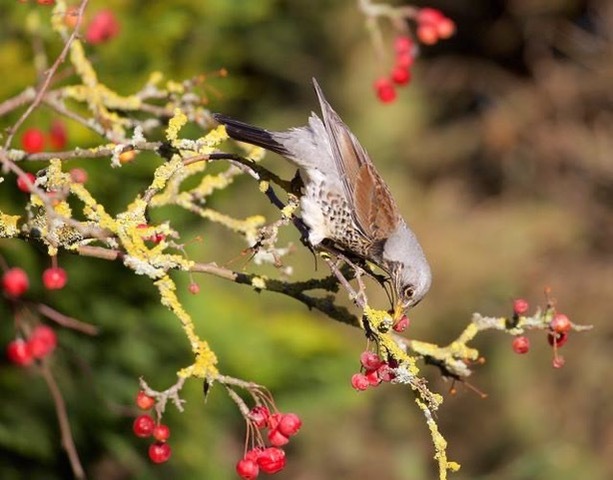
The very cold weather has brought Fieldfares, (Turdis pilaris), into the garden to feed on apples from our fruit trees, some of which we store every year especially to feed migrant birds during the Winter.
These large, aggressive Thrushes arrive in the UK in Winter after migrating from Scandinavia, Russia and Eastern Europe. As food stocks in their Summer breeding grounds run out, they seek out our milder climate and can often be seen in large flocks feeding on earthworms and other invertebrates in fields, or on berries in our hedgerows and parks. The name ‘Fieldfare’ comes from the Anglo-Saxon ‘Feldware’, meaning, ‘traveller of the fields’.
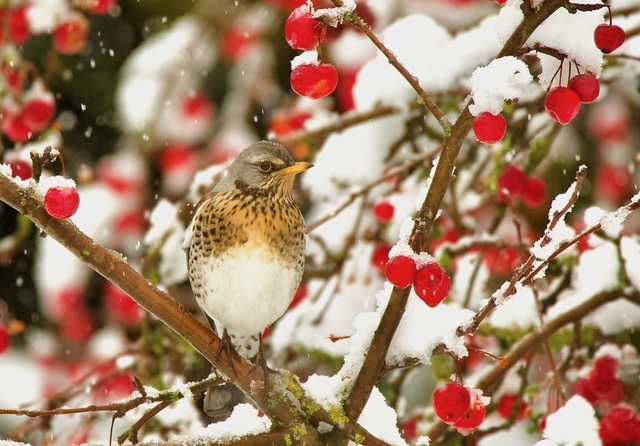
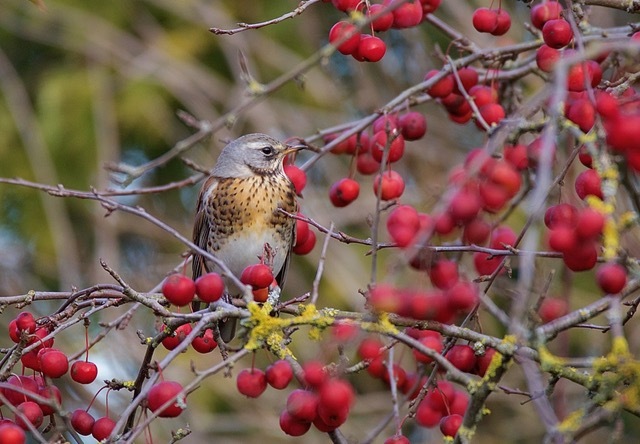
Their arrival in our garden is heralded by a cacophony of ‘chack-chack’ calls as they fly in, en-masse to feast on the berries in the Hawthorn hedges and apples on our Apple trees, especially the Malus ‘Red Sentinel’, which holds onto its fruit well into the new year. A sizeable flock can strip a large tree of its fruit in just a couple of hours.
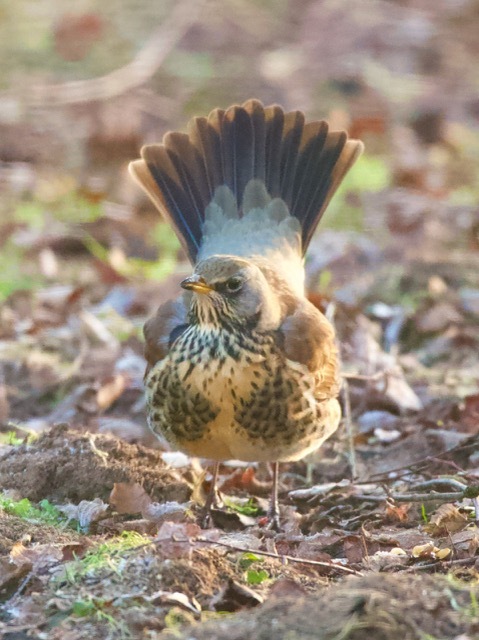
The gregarious birds soon commandeer the halved apples we have provided for the Blackbirds and Song thrushes in the harsher months, and are very quickly hopping purposefully about the area, intimidating the other birds, fanning their tails and refusing them access to the fruit. Watching the show of bravado through the window of our home, it is apparent that they spend far more time keeping other birds at bay than actually eating the fruit!
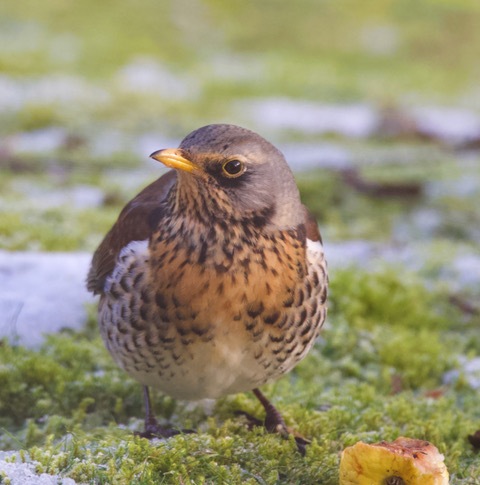
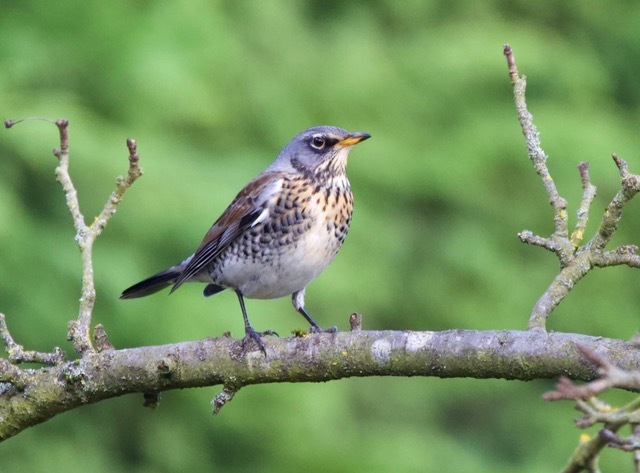
An attractive species, Fieldfares are slightly larger than Blackbirds, with a slate-grey head, nape and rump, dark-brown back and grey/black tail. Their creamy-white breasts are brushed with ochre above and heavily marked with black spots. They have a yellow beak, black markings beneath the eye and a pale streak above, giving them a brooding appearance. The sexes are similar, with females being slightly more brown.
Fieldfares have an almost comically aggressive glare when viewed from the front, and it’s easy to see why the ‘hard-stare’, combined with the assertive, rapidly advancing, hopping gait is so intimidating to other birds.
The nomadic flocks of Fieldfare follow the supply of fruit down the country, often in the company of Redwings which we also see regularly in our garden during the Winter months, and there are a few amongst the birds arriving in the garden now. These less dominant birds, seem to spend the majority of their time on the ground, rummaging through leaf-litter in search of invertebrates, only seeking out the apples when there is a significant covering of snow.
We look forward to the arrival of the Fieldfares and Redwings (Turdus iliacus) each year, and by providing halved apples close to our windows, we are able to view these attractive, characterful birds at close quarters, a real treat in the midst of Winter.