Meeting Reports November 2025
Title : From the Archives
Leader : Colin Howes & Les Coe
Objective : To update members on recent developments and acquisitions to the archives
Apologies : Paul & Joyce S, Nora B, Jim B.
Attendance :12 members, including the speakers, were present
First, Colin gave an update regarding ongoing activities at the museum, and how this was affecting the archives.
Then Les reviewed how society acquired the archives of the late Ben Burrell, for which we have to thank the archivist of the British Astronomical Association (BAA), Dr. Richard McKim. (this collection was on show). Ben Burrell had been a prominent member of the society between the years 1931 and 1976, twice being president (1944 and 1956), Hon Secretary from 1917 to 1950, a committee member 11 times, and acted as reorder for astronomy, photograph and physics. He led the society on many field meetings and gave five lecture to the society, all on astronomy. He was also a very active member of the BAA.
He worked at the LNER works in Doncaster, initially as a fitter, later as the works photographer. Ben’s archives we acquired contained a variety of photographic media, including glass plates, slides and coloured photographs. All of the these have since been digitised, and were then displayed, via our website, to the meeting.
The website generally was then reviewed, showing the archives that have so far been transcribed and added, along with various articles submitted my members.
A selection of articles from the archives and some items having been ‘rescued’ from the museum, were on display.
A vote of thanks accorded to the speakers brought the meeting to a close.
Please note, volunteers to assist in the typing up of the archives are welcome.
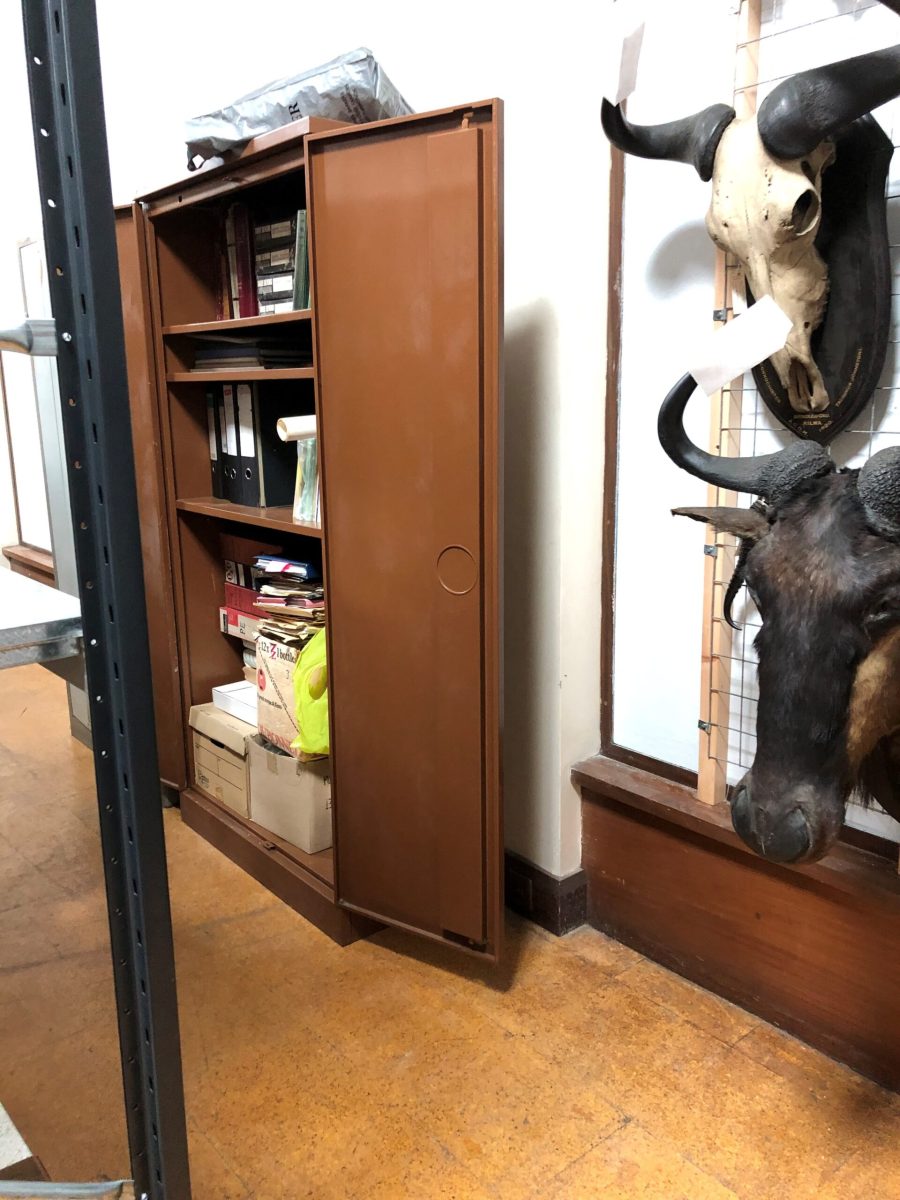
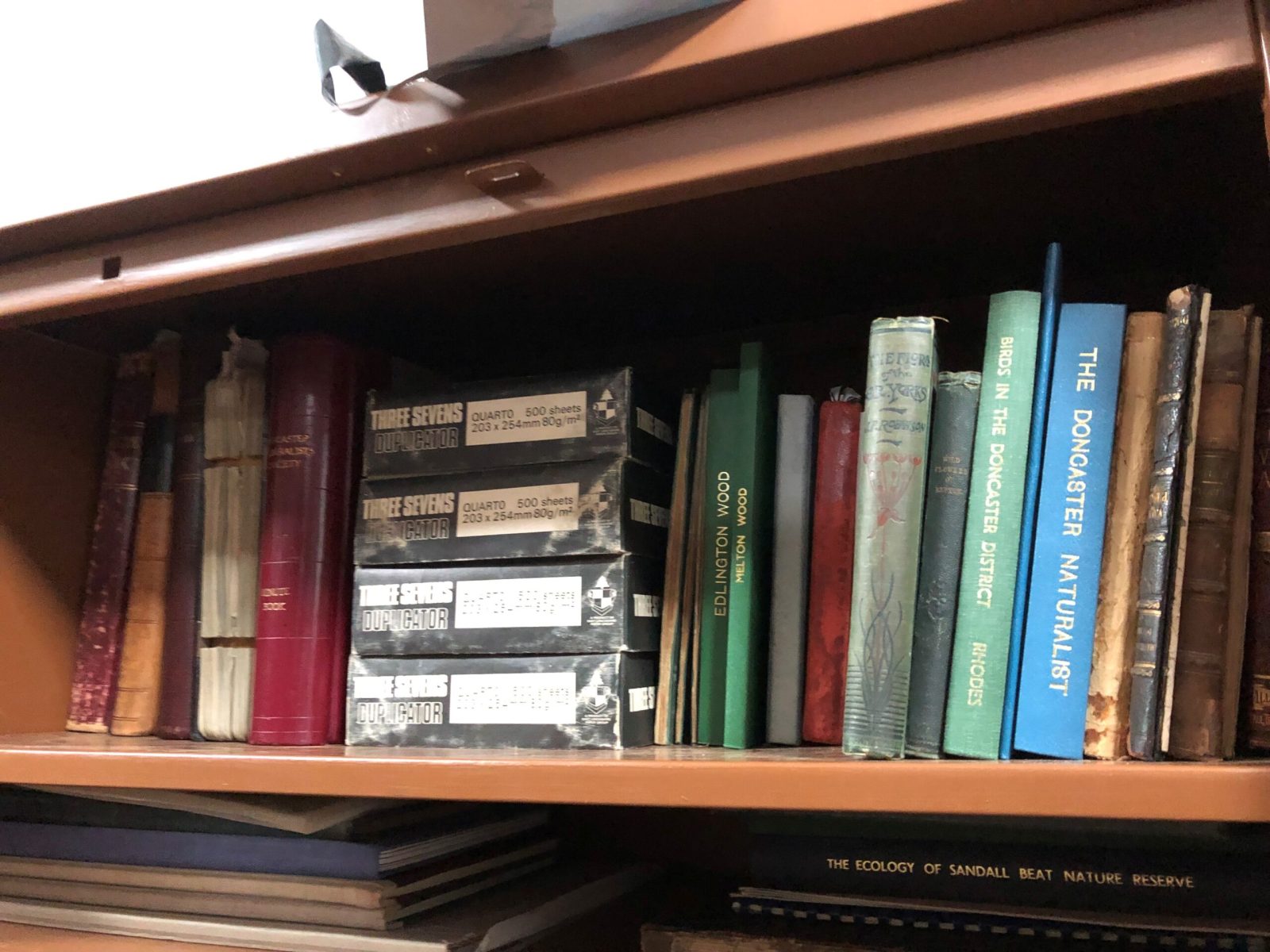
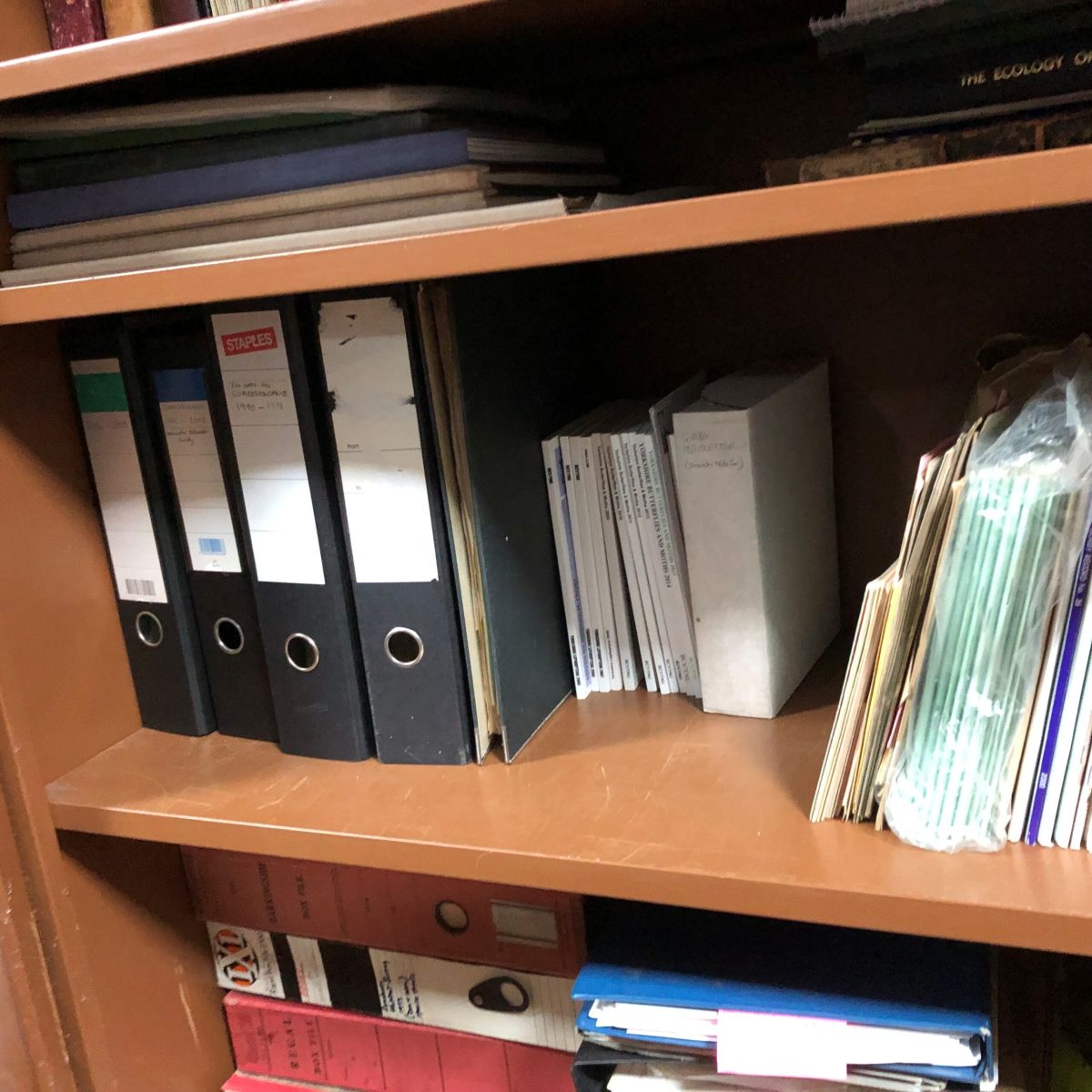
Photos below show the contents of the cupboard after all the microscopes had been removed by Jim


Title : Mosses at Brockadale
Leader : Steven Heathcote
Objective : To find and record the incidence of mosses on the site
Attendance : Colin H.
Due to the inclement weather, the meeting did not get underway
Title : Talk by Roger Key FRES a renowned entomologist
Attendance : 19 Members and Roger, Rosie & Jane Key
Colin Howes introduced the speaker, reviewing how Roger became interested in natural history, and how this further developed after meeting Peter Skidmore.

Title : Doncaster Naturalists’ River Idle, Bawtry for Harvest Mouse Search
Leaders : [Jim Burnett] & Colin Howes.
Other Attendees : Les C; Samantha & Graham B.
Apologies : from Jim who was suffering from fractured ribs and pulled muscles due to coughing as a result of a prolonged chest infection.
Meeting place : 1:30 pm. at St Nicholas’ Church, Church Street, Bawtry. SK653 930 Post Code DN10 6HX
Background: This is part of our scheme to locate Harvest Mouse populations on each of the river wetlands in the Doncaster region. Jim had discovered a very reedy wet path adjacent to the Idle riverside marshes, which held promise as a harvest mouse habitat, the path commencing under the railway viaduct SK654 930 to the rear of St Nicholas’ parish church.
Results : The path wound through wet river marsh habitat dominated by Reed Sweet-grass Glyceria maxima with some Great Reed-mace Typha latifolia, Reed Canary-grass Phalaris arundinacia with Sallow shrubs Salix spp. and the occasional venerable Crack Willow Salix fragilis by the path. Other species included Gypsywort Lycopus europaeus, Marsh Woundwort Stachys palustris and Woody Nightshade Solanum dulcamara. There was also a large clump of Japanese Knotgrass, possibly introduced on engineering equipment during flood engineering work.
Harvest Mice (!) : Within moments of pulling on his gardening gloves and ferreting into a thick clump of Glyceria, supported by a Dog-rose shrub, Les found a perfect, tightly woven Harvest Mouse Nest. Despite all four of us searching through suitable vegetation for about 2 hours (1 nest in 8 search hours) no other nests were found, though Graham found what may have been the basis of an abandoned nest effort and I found a promising bundle of longitudinally shredded Glyceria leaves, again, the evidence of an abandoned nest.
Clearly the species was in residence but in a very low numbers. Since Barn Owl aficionados had reported low owl breeding successes this year, giving low rodent numbers as the likely reason. It might be that Harvest Mouse numbers were also unaccountably low this year.
The excavated lake SK656 932 in the cattle field beyond the footpath style held a Mute Swan, several Mallards and about 50 Teal which took flight on our arrival.
Jim had suggested visiting the Idle banks here in spring and summer for botanical and entomological interest. Giving evidence of this, the last plant in an off-shore raft of aquatic plants was a prominent seed head of the Flowering Rush Butomus umbellatus.
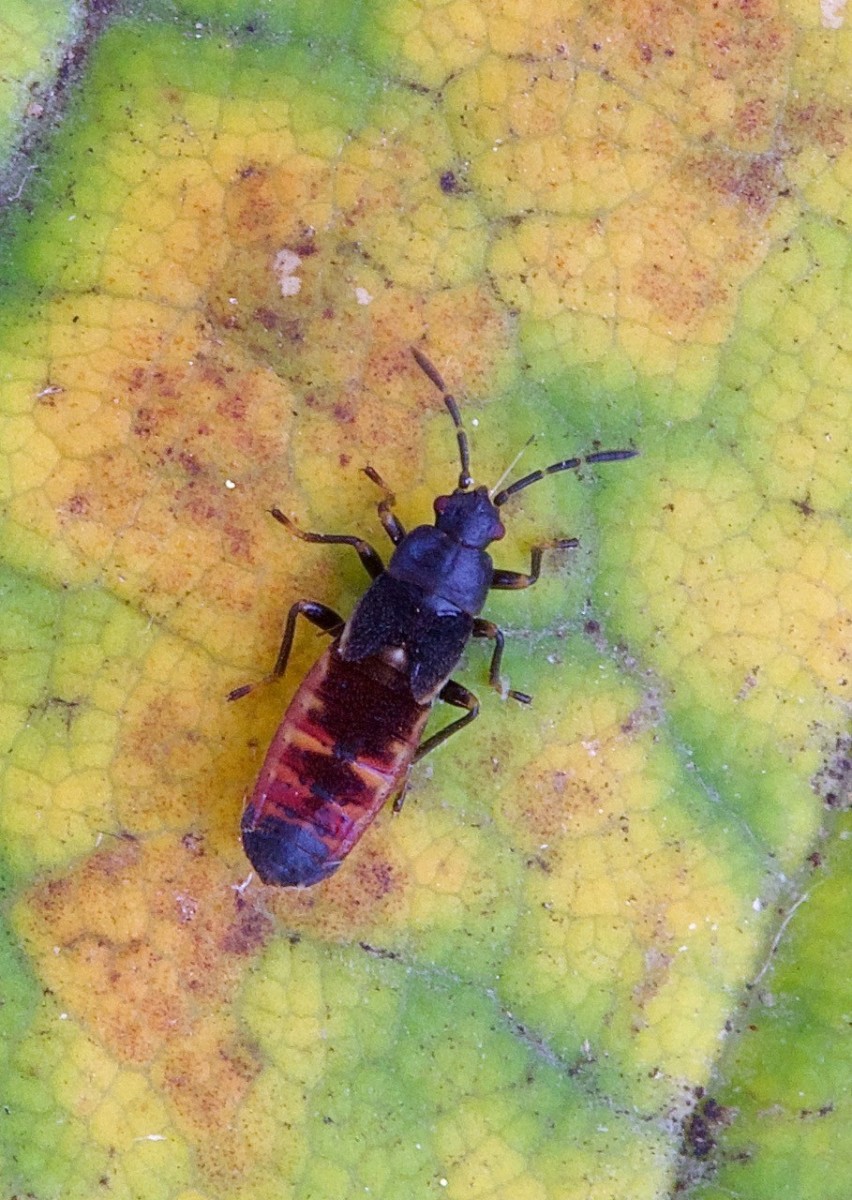
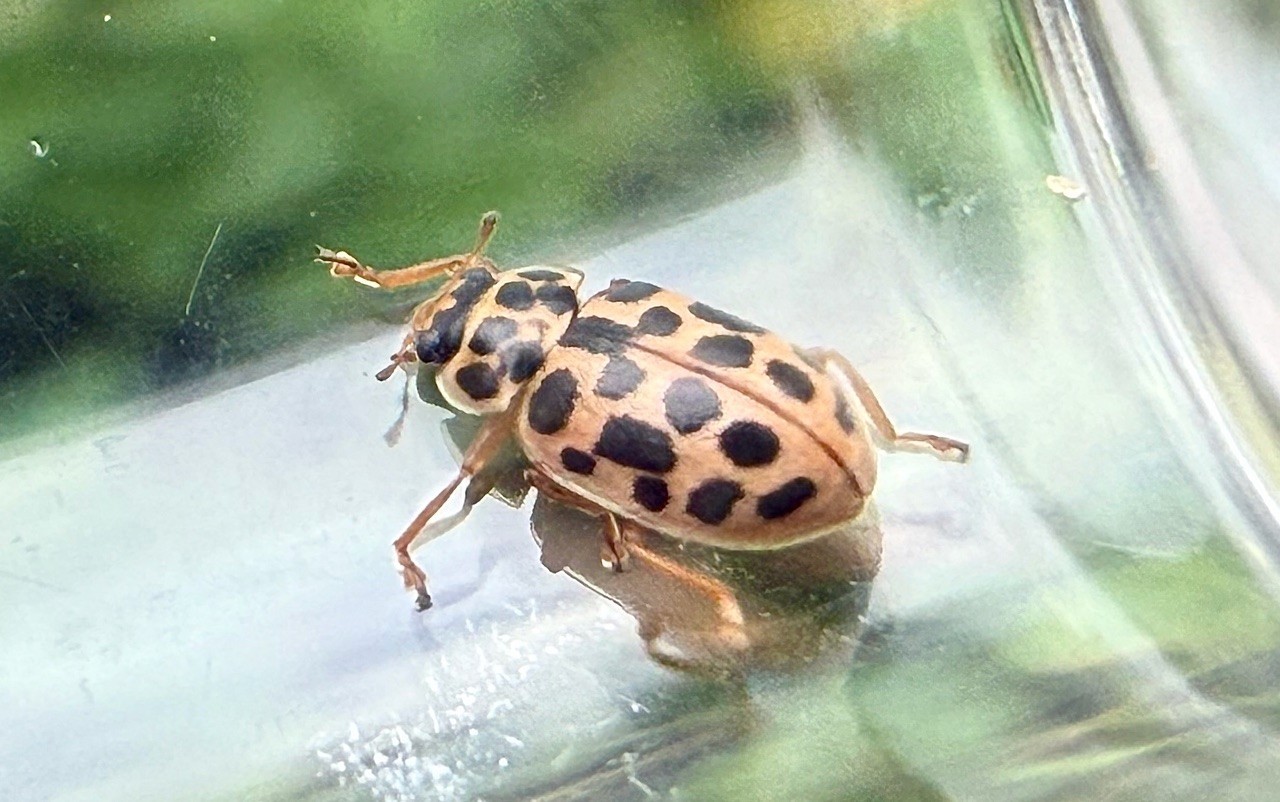
Invertebrates: Dozens of tiny (5-6mm) insects were found massed on dead Glyceria vegetation. These were identified by Samantha as the nymph of Hemipteran (bug) Ischnodemus sabuleti the European Chinchbug, they all being the short winged form. Also, a single Water Ladybird (Anisosticta novemdecimpunctata), also known as the 19-Spot Ladybird, was found on the reeds. This species changes colour in autumn from red to beige/ochre colour ; our specimen was a pale ochre colour.
Interestingly this brought memories of an ecstatic Peter Skidmore discovering the species when we were surveying Low Ellers YWT Nature Reserve (now Potteric Carr) in 1969-70 in order to deflect the M18 from being routed through Sandall Beat and Potteric Carr Nature Reserves. In those days it was new to Yorkshire and the North of England, the Proof of Evidence we presented at the M18 Public Inquiry [including masses of other evidence and research] noting “Ischnodemus sabuleti was believed not to occur north of Essex until it was found at High Ellers Carr.”
In the British Isles its history has been one of gradual expansion over many decades. Prior to 1893 it was only known from one site in Surrey; by 1959 it had reached Essex. Its spread has continued since then reaching as far north as Doncaster by 1970. The NBN Atlas shows its current progress up to North Yorkshire and Durham. It is often found in coastal dunes and on inland wetland sites swarms of thousands are often found on Reed Sweet-grass.
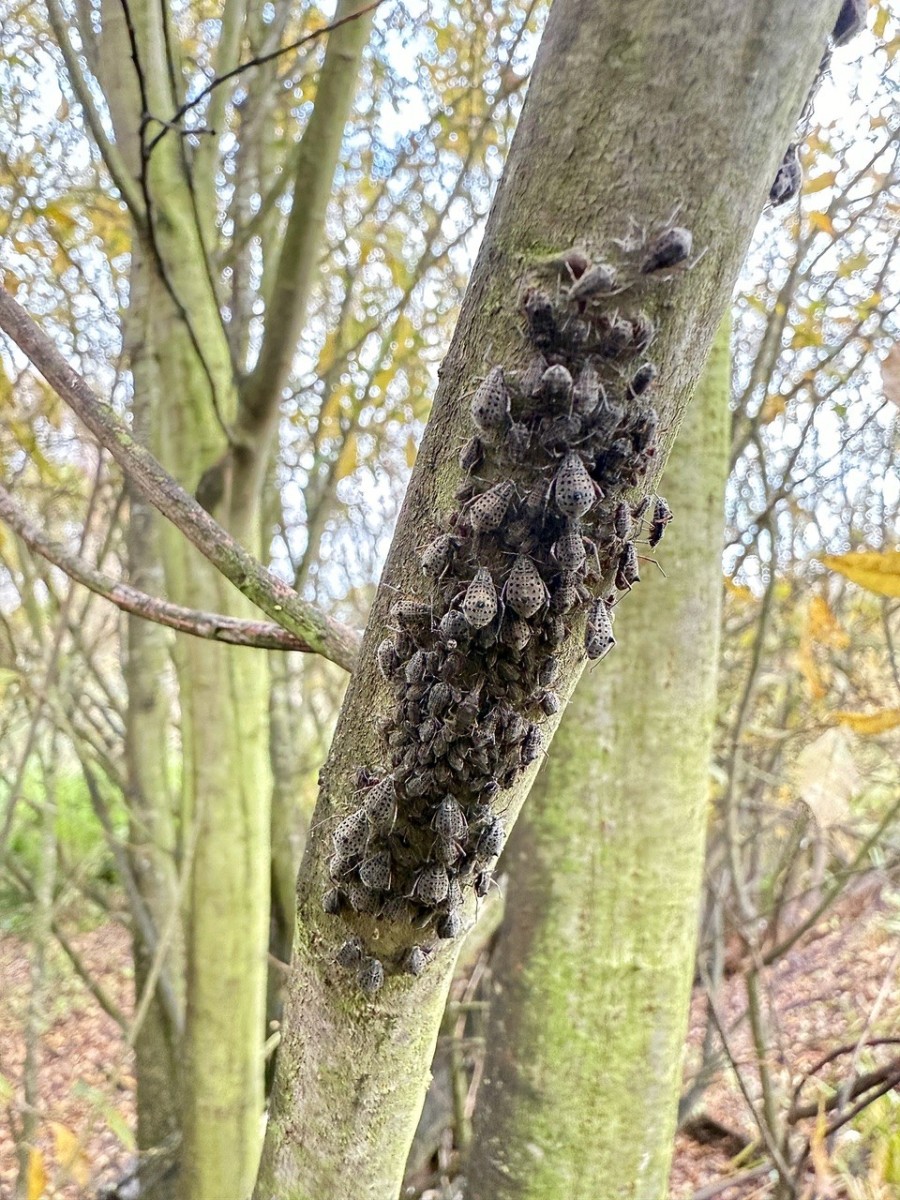
On all of the Sallow shrubs Samantha and Graham found numerous colonies of the Giant Willow Aphid Tuberolachnus salignus. These were concentrated on stems from 0.5 to 2.5cm diameter and colonies ranged in length from 15cm to 30cm.
Many thanks to Les, Samantha and Graham for making it an enjoyable and productive visit on an otherwise gloomy November day. And thanks to Jim for drawing this site to our attention.
Note: It may be worth coming here again in the summer months.
CAH.