Meeting Reports April 2025
Leader : Bernard Russell
Other Attendees :
Meet : 1.30 pm in lay-by off the A635 East of the A1 junction.
Subject : Seeing a woodland in the early stages of regeneration into a traditional coppice with standards wood.
Present, Bernard Russell leading the walk, 6 Doncaster Nats members.
Weather: Bright , sunny at times.
Mr. Russell gave a background to his purchase of the wood in 2011.
Ducker Holt is over 200 years old having been part of the Brodsworth Hall estate. It extends to 3.27 hectares, with an adjoining small plantation dating from the construction of the A1m in late 1950s. The plantation remains in Highways England ownership.
The wood is covered by a tree preservation order, so to facilitate management, a woodland management plan was prepared and felling licence granted. A second plan and licence has been approved in April this year, covering the years 2025 to 2035.
A system of coppice with standards has been adopted. Thinning of standard trees will be mainly by reducing sycamore which has been increasingly invasive.
Oak , beech and ash (disease permitting) will form a major part of the canopy.
There are however 19 different genera of trees. Introductions have been limited, Tilia cordata being one exception
Hazel with be the main coppice species.
Biodiversity is the main aim of the woodland management plan.
Wood Anemone, Celandine, and to a lesser extent Bluebell, are the most conspicuous ground flora species. Increased light levels will hopefully enhance this layer.
Goldilocks (Ranunculus auricomis) was identified on the walkabout. An indicator of old, if not ancient woodland. Ducker Holt obviously not in the latter category.
A glade has been formed in the wood, this is cut and raked off after flowering in late summer. A few introductions have been made in this area, birds foot trefoil has established, yellow rattle to reduce the vigorous grasses , not so successful.
Galls on oak was given attention by members , particularly new season growth.
A management aim is to increase deadwood communities. Standing wood – ringbarked sycamores, retained dead elms, and several habitat piles have been created.
The visit was very much appreciated by Mr. Russell, and further possible activities could include:-
Moth recording,
Beetle survey,
Autumn fungal survey,
Archaeology – there are extensive limestone deposits on the edge of the wood, these have been ploughed out from the adjoining field , and tipped over many years.
Bernard Russell, 24 April 2025
Records: These are additional records from the notebook of CAH, to supplement the report submitted by Bernard on 24 April 2025.
| Scientific Name | Vernacular Name | Notes |
| Trees, Shrubs & Woody Climbers | ||
| Acer campestre | Field Maple | |
| Acer pseudoplatanus | Sycamore | |
| Caprinus betulus | Hornbeam | |
| Castanea sativa | Sweet Chestnut | |
| Crataegus monogyna | Hawthorn | |
| Fagus sylvatica | Beech | |
| Fraxinus excelsior | Ash | Areas with many self-set saplings |
| Ilex aquifolium | Holly | |
| Ligustrum vulgare | Wild Privet | |
| Prunus avium | Wild Cherry | |
| Quercus robur | Pedunculate Oak | |
| Ribes uva-crispa | Wild Gooseberry | |
| Rosa canina | Dog Rose | |
| Rubus fruticosa agg. | Bramble | |
| Sambucus nigra | Elder | |
| Sorbus aucuparia | Rowan | |
| Taxus baccata | Yew | |
| Tilia cordata | Small-leaved Lime | |
| Hedera helix | Ivy | |
| Herbs & Ferns | ||
| Alium ursinum | Ramsons | |
| Anemone nemorosa | Wood Anemone | |
| Arctium minus | Lesser Burdock | |
| Arrhenatherum elatius | False Oat-grass | |
| Arum maculatum | Arum | |
| Brachypodium pinata | Tor-grass | |
| Brachypodium sylvaticum | Wood False Brome | |
| Cirsium vulgare | Spear Thistle | |
| Daphne laureola | Spurge Laurel | Ca. 36 plants counted along limestone escarpment. |
| Deschampsia flexuosa | Wavy Hair-grass | |
| Dryopteris filix-mas | Male fern | |
| Ficaria verna | Lesser Celandine | |
| Galium aparine | Cleavers | |
| Heracleum sphondylium | Hogweed | |
| Holcus lanatus | Yorkshire Fog | |
| Holcus mollis | Soft-grass | |
| Hyacinthoides non-scripta | Bluebell | |
| Hypericum hirsutum | Hairy St John’s-wort | |
| Jacobaea vulgaris | Common Ragwort | |
| Lonicera periclymenum | Honeysuckle | |
| Mercurialis perennis | Dog’s Mercury | |
| Polygonum aviculare | Knotgrass | |
| Pteridium aquilinum | Bracken | |
| Ranunculus auricomis | Goldilocks | |
| Ranunculus repens | Creeping Buttercup | |
| Stellaria holostea | Greater Stitchwort | |
| Teucreum scorodonia | Wood Sage | |
| Urtica dioica | Nettle | |
| Fungi | ||
| Daldinia concentrica | King Alfred’s Cakes | |
| Diptera (Flies) | ||
| Syrphus ribesii | A striped Hoverfly | |
| Lepidoptera (Butterflies & Moths) | ||
| Anthocharis cardamines | Orange–tip Butterfly | |
| Arachnida (Spiders etc.) | ||
| Tetragnatha extensa | An Orb-web spider | |
| Plant Galls | ||
| Andricus kollari | Marble Gall on Pedunculate Oak | |
| Andricus aries | Rams-horn Gall on Pedunculate Oak | |
| Mollusca (Slugs & Snails) | ||
| Arion ater | A Black Slug | |
| Birds | ||
| Columba palumbus | Wood Pigeon | |
| Erithacus rubecula | Robin | Singing |
| Fringilla coelebs | Chaffinch | Singing |
| Phyllocopus collybita | Chiffchaff | Singing |
| Sylvia atricapilla | Blackcap | Singing |
| Mammals | ||
| Orictolagus cuniculus | Rabbit | Droppings |
| Talpa europaea | Mole | Hills |
| Vulpes vulpes | Fox | Scent |
From C.A. Howes’ field notebook.
Leader : John Scott
Other Attendees :
Meet : 1.30 pm on site (SE605134)
Subject : Admiring the display of spring flowers
Leader : Mick Townsend.
Other Attendees :
Meet : 7:30 pm at the level crossing on Applehurst lane. (SK539912)
Subject : A Newt discovery and census meeting
HERPTILE REPORT.
GREAT CRESTED NEWT, Tritutus cristatus and SMOOTH NEWT, Triturus vulgaris .
On the evening of Monday 14th April, Mick Townsend and Louise Hill along with volunteer wardens, Julie Leyland, Nathaniel Leyland, Janet Mansell and Barry Evans, surveyed the following water bodies.
We observed the following numbers of Great Crested Newts, Triturus cristatus, and Smooth Newts, Triturus vulgaris, and curled-over leaves each containing an egg at the following locations.
| Location | Grid reference. | Number of animals and eggs |
|---|---|---|
| Applehurst Flash. (about 40% surveyed) | SE 585097 | 60 folded leaves each holding a Smooth Newt egg or a Great Crested Newt egg. 3 female and 2 male Smooth Newts and 1 female Great Crested Newt. |
| Applehurst Pond | SE 588097 | 3 Smooth Newts – a courting pair and 1 other. |
| Small pond and drain in Sicklecroft | SE 590097 | 12 Smooth Newts including 2 females and 2 males. 13 male Great Crested Newts. 1 female newt. |
| The easternmost of the Mere Scrape ponds | SE 590096 | 1 female Smooth Newt. |
| Total | 14 Great Crested Newts, 21 Smooth Newts, 1 unidentified newt and 60 eggs. |
We saw no signs of newts in Louis’s Pond, the pond near to the feeding station nor in the other two sections of the Mere Scrape.
Among other observations were the calls of a Water Rail, Tawny Owl and a Pipistrelle Bat.
Louise Hill saw a mammal swimming with its back fully out of the water in a pond in Sicklecroft.
It was lightish brown with a broad, almost rectangular back and no obvious sign of a tail. In view of neatly nipped-off soft rush stems near to where the animal swam there is a strong suspicion that it was a Water Vole, Arvicola amphibius. 100% confirmation was not possible due to the inability to check for latrines, droppings or feeding platforms in the fading light.
Interestingly this waterlogged margin, in the smaller part of Applehurst Field, may have been a retting pond for hemp or flax grown here in the late 18th and early 19th centuries.
M. Townsend.
Leader : Colin Howes
Other Attendees : nil unfortunately.
Meet :
Subject : Photographing and/or admiring (Pip’s) Owston Fritillaries
It was a lovely morning at Owston Meadows, and I apologise for not giving people sufficient time to respond to the call for an ad-hock field meeting.
With the hedgerow along Stockbridge Lane still in the process of greening up, it was quite possible to see the colourful patch of flowers through gaps in the greenery, probably making them quite vulnerable to passers-by wishing to pick them.
The colony looked wonderful, nodding and bobbing in the breeze and were most photogenic (though I didn’t have a camera!). I’m sure they’ll be in flower for a few weeks yet, if DNS members wish to arrange with Margaret to take photos.
The flower heads were so closely packed together, there was a definite problem in making a reliable count. However, by dividing the patch up into sections by laying tall Phragmites reed stems across the colony, I came up with the following count:
Purple/Chequered heads = 90
Cream/White heads = 18
Immature non-flowering plants = c.46
Decapitated plants = 2
Total Fritillaries = c.156
At least there weren’t any Lily Beetles Lilioceris decapitating the colony as regularly happens in domestic gardens, but a single Carder Bee Bombus pascuorum was collecting pollen and hopefully fertilizing the flowers.
I suppose a later visit to count the number of seed-heads would be a useful exercise.
On the way back to Margaret and Jeff’s house to return the key I wandered through the churchyard of the 12th Century All Saints Church and found the place deserted, even on Palm Sunday. I know the congregation now use the sister churches in Carcroft and Skellow but my recollections are of Rev. Marc Seccombe, Pip Seccombe and their family being based in the vicarage and the place being a hive of activity … bless you Marc and Pip, you are greatly missed but the Fritillaries and the Owston Hay Meadows Nature Reserve are legacies we greatly enjoy.
CAH.
Leaders : Joyce & Paul Simmons and Louise Hill.
Other Attendees :
Meet : 10.30 am in Brockadale car park WF8 3JS (SE512174).
Subject : Wood Anemones and Moonwort search.
Doncaster Naturalists Society excursion to Brockadale Nature Reserve
(SE5117, SE5017 and SE4917) 11th April 2025 10.30pm – 16.15pm.
10 Members met at the Reserve Car park of Leys Lane, Kirk Smeaton:

Brockadale Woodland
Three members extended the visit to explore the steeper slopes of Sayles Plantation, a woodland that has been recently purchased by the Yorkshire Wildlife Trust. One later arriving member joined this party on the return leg from Sayles Plantation back to the car park.
Our tour started at the Car Park taking in the spring specialities at Car Park Bank SE 51237 17193
Cowslip Primula veris, Field Mouse-ear Cerastium arvense and Spring Cinquefoil Potentilla tabernaemontani and diverting up slope to view a recent species-recovery project before heading down towards the Footbridge, crossing over the River Went and then continuing upslope to the far western arm of Thompson’s Meadow to a small field know as Elwiss’s Field.
Adder’s-tongue Ophioglossum vulgatum were just beginning to show north east of a lone hawthorn SE50661703, but the target species Moonwort Botrichum lunaria could not been seen under a dense thatch of grass and bramble. It was decided to abort any attempt at a count until urgent management work could be undertaken (a reserve work party was already planned for the coming Sunday).
Along the banks of the River Went, en route to Sayles Plantation, the group noted several young Bird Cherry Prunus padus saplings, Black Currant Ribes nigrum and Wood Sorrel Oxalis acetosella. Wild Angelica Angelica sylvestris and Hemlock Water-dropwort Oenanthe crocata were also seen on the steep muddy banks of the river.
In the river itself, north of Sayles Plantation are Branched Bur-reed Sparganium erectum, Marsh-marigold Caltha palustris and a small group of the Giant Kingcup Caltha palustris subsp. polypetala growing on a small muddy island mid channel
Sayles Plantation occupies a steep north-facing slope on the southern side of the River Went just downstream of the A1(M) at Wentbridge. The eastern boundary is formed in part by a broken-down dry stone wall. The main plantation canopy comprises abundant Ash Fraxinus excelsior and frequent Sycamore Acer pseudoplatanus with only occasional Beech Fagus sylvatica. There is a sparse understorey predominantly of Wych Elm Ulmus glabra with locally-frequent Wild Privet Ligustrum vulgare and occasional Hawthorn Crataegus monogyna. Blackthorn Prunus spinosa, Holly Ilex aquifolium and Field Maple Acer campestre are also present on the southern margins and Hazel Corylus avellana is locally frequent along the lower slopes. Gooseberry Ribes uva-crispa occurs in localised area in the sunken track on the southern margin and also on the lower riverside slopes.
There is also a locally frequent underscrub of Red Currant Ribes rubrum but Dogrose Rosa canina agg. and Bramble Rubus fruticosus agg. are rare.
There is diverse limestone herb layer dominated by Dog’s Mercury Mercurialis perennis with abundant Primrose Primula vulgaris, Early Dog-violet Viola reichenbachiana frequent Lords-and-Ladies Arum maculatum, False Brome Brachypodium sylvaticum, Dandelion Taraxacum agg. and locally frequent Pignut Conopodium majus. Common Ivy Hedera helix dominates some areas, especially along the sunken track and a small patch of Ramsons Allium ursinum is also found in this area as is a small clump of the non-native Italian Lords-and-Ladies Arum italicum. Bluebell Hyacinthoides non-scripta, Wood Avens Geum urbanum, Ivy-leaved Speedwell Veronica hederifolia, Ground-ivy Glechoma hederacea and Common Dog-violet Viola riviniana occur in lower numbers. Wood-sedge Carex sylvatica is locally-frequent only along the lower riverside footpath.
Crags and outcrops within the woodland support Hart’s-tongue fern Asplenium scolopendrium, Wall Lettuce Mycelis muralis and, rarely, Wall-rue Asplenium ruta-muraria.
Level areas of woodland are only found at the top of the slope, beside buildings associated with the adjacent quarry. Hedge Woundwort Stachys sylvatica and an abundance of Lesser Celandine Ficaria verna were noted here. Beside the quarry haul road is a more ruderal element including Lesser Burdock Arctium minus and Hogweed Heracleum sphondylium.
Damper soils on the lower slopes above the river support abundant Lesser Celandine with some Barren Strawberry Potentilla sterilis growing on mossy rocks in more open areas. Great Willowherb Epilobium hirsutum, Meadowsweet Filipendula ulmaria, Cleavers Galium aparine and Indian Balsam Impatiens glandulifera are locally frequent along with Raspberry Rubus idaeus and Common Nettle Urtica dioica. Also present in smaller numbers are Cow Parsley Anthriscus sylvestris, Meadow Crane’s-bill Geranium pratense Herb-Robert Geranium robertianum and Hogweed Heracleum sphondylium. An ornamental conifer grows beside the river.
In the wide low-lying floodplain under the Wentbridge Viaduct is an area of deep alluvial soils dominated by nitrophilous species including abundant Indian Balsam, and Common Nettle with Cleavers, Hogweed frequent Lesser Burdock, Hemlock Conium maculatum and occasional Garlic Mustard Alliaria petiolata but in early spring the areas is also carpeted by Lesser Celandine. Scattered Osier Salix viminalis grow by the meandering River channel and there are scattered patches of Raspberry.
The group extended the tour up to the A1(M) road viaduct to meet up with at group of volunteers from the Don Catchment Rivers Trust who were carrying out some river sampling above and below the Viaduct. There are concerns that water quality and biological life is being affected by untreated road drainage entering the River Went at this point.
Incidental faunal sightings included:
A single roe deer (Seen in the upper section of the Sayles Plantation.
Brown lipped banded snail (many)
Speckled Wood Buttefly
Brimstone Butterfly
Orange Tip Butterfly x 2
Red tailed Bumblebee
Great spotted woodpecker
Great Tit
Chiffchaff
LAH 12th April 2025
Postscript
A management work party was held on the 13th of April to clear the bramble and thatch on Elwiss’s meadow. Following this clearance a count was made and 13 individual spikes of Moonwort were found. Three spikes emerging from one location quote close to the lone hawthorn and the others strung out in a broadening line that possible seems to orientate with a subtle dip in the slope at this point. The observed population is encompassed by the triangle formed by the lone hawthorn, a young purging buckthorn and the mature ash near to the woodland margin.
Leaders : Louise Hill & Colin Howes
Other Attendees : Tim, Jim, Les, Lesley
Meet : 1:30 pm at Clifton Beacon. SK519962 Postcode S66 7SA
Subject : The proposed Solar Farm:
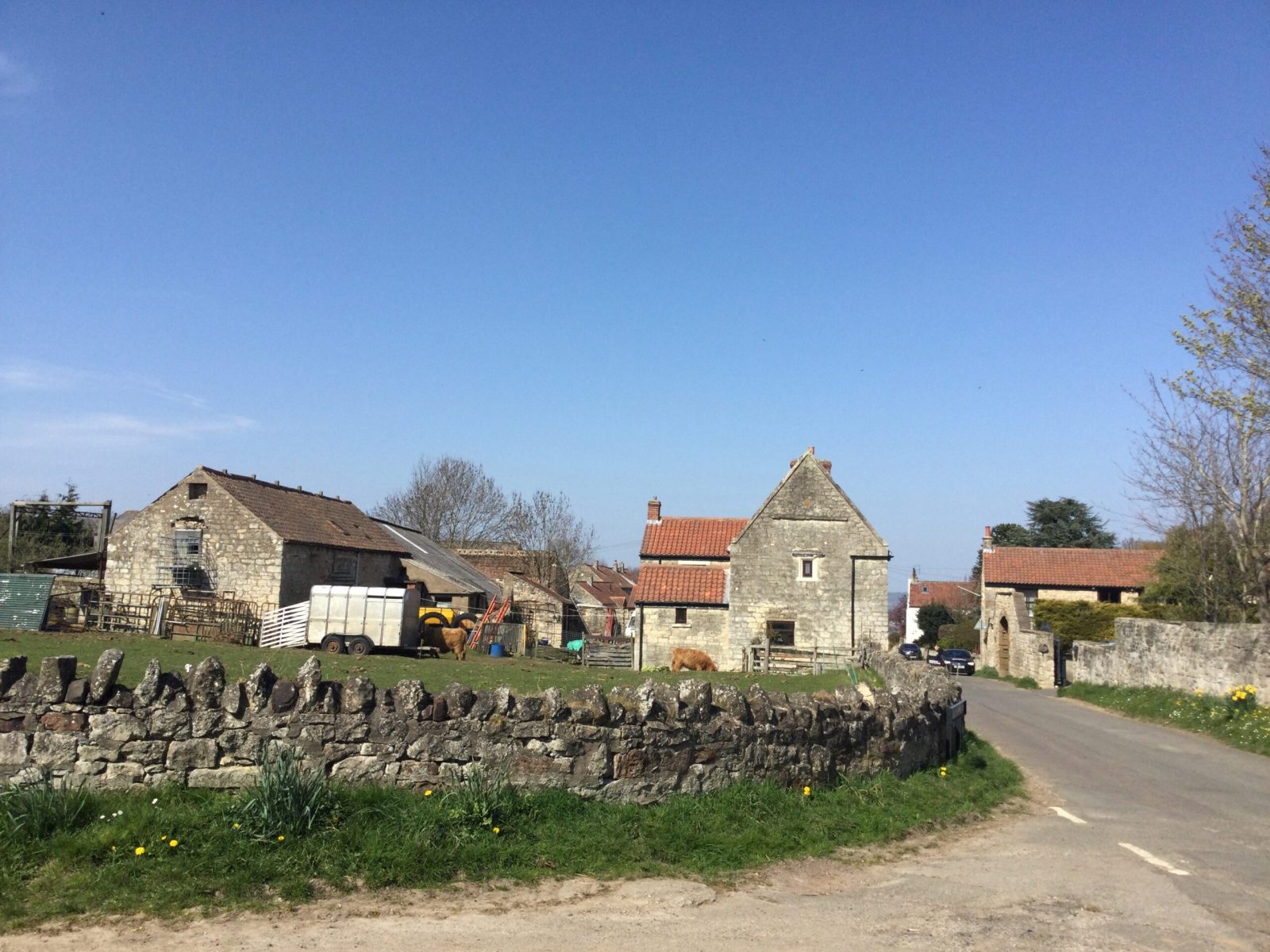
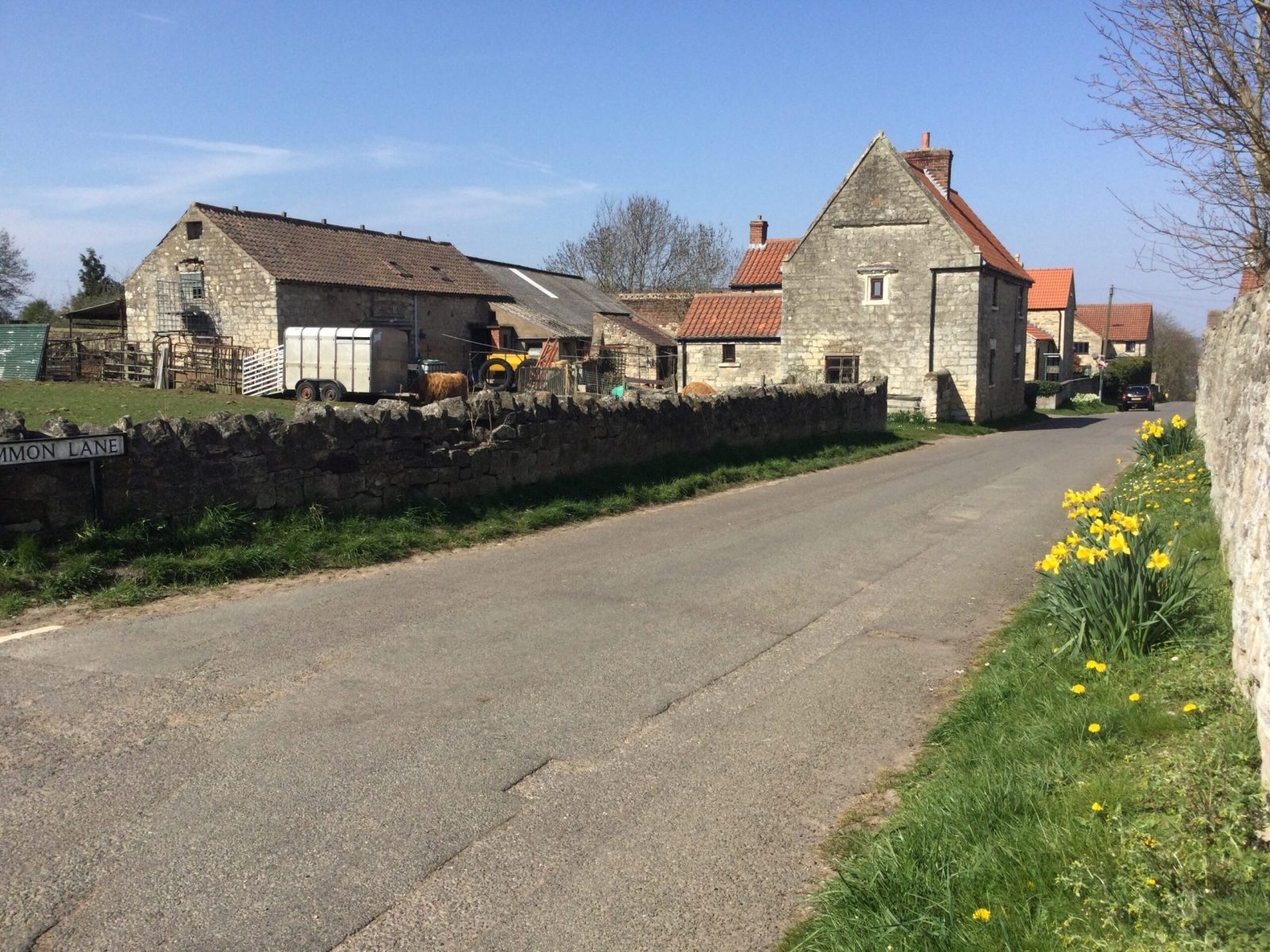
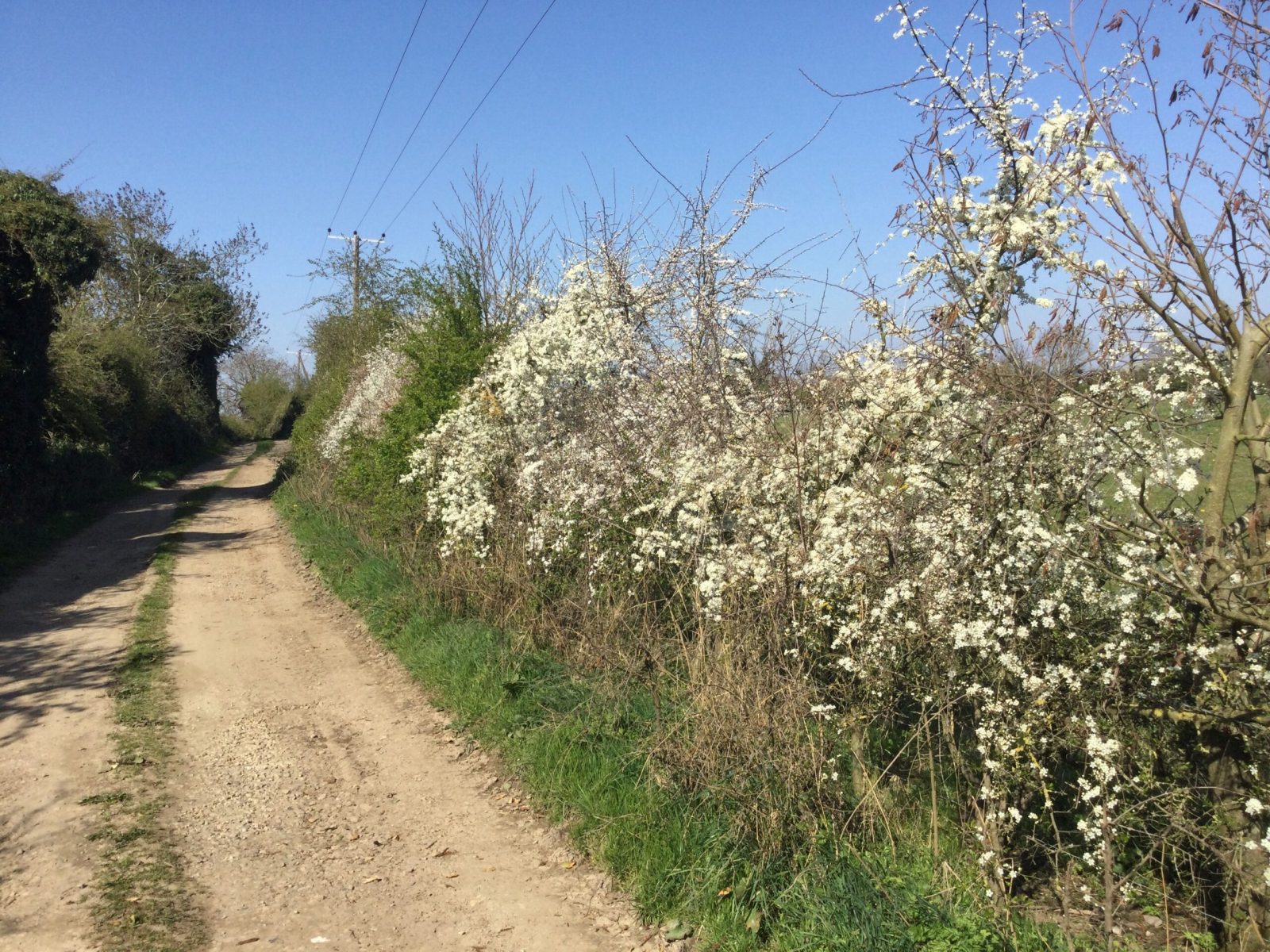
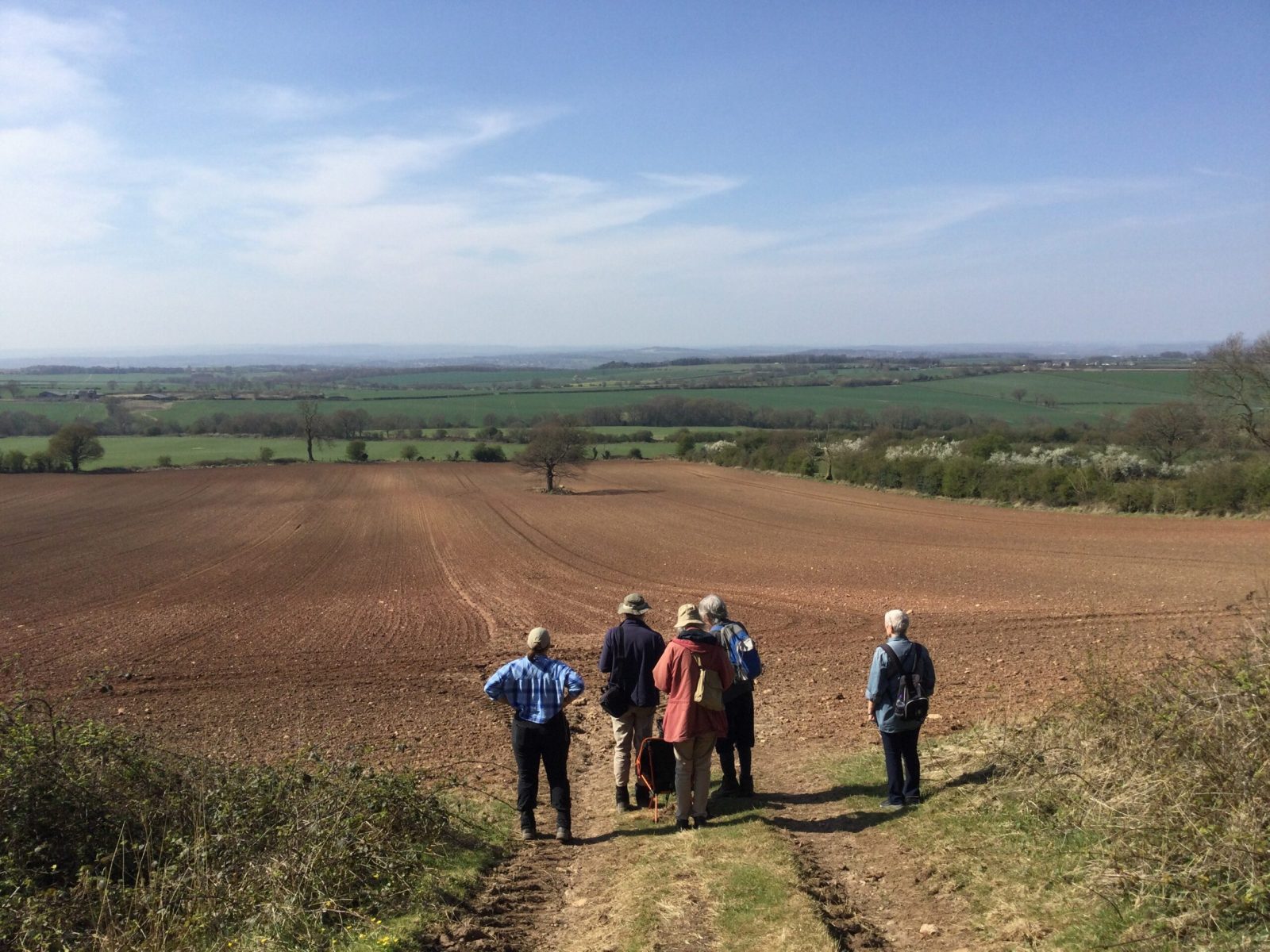
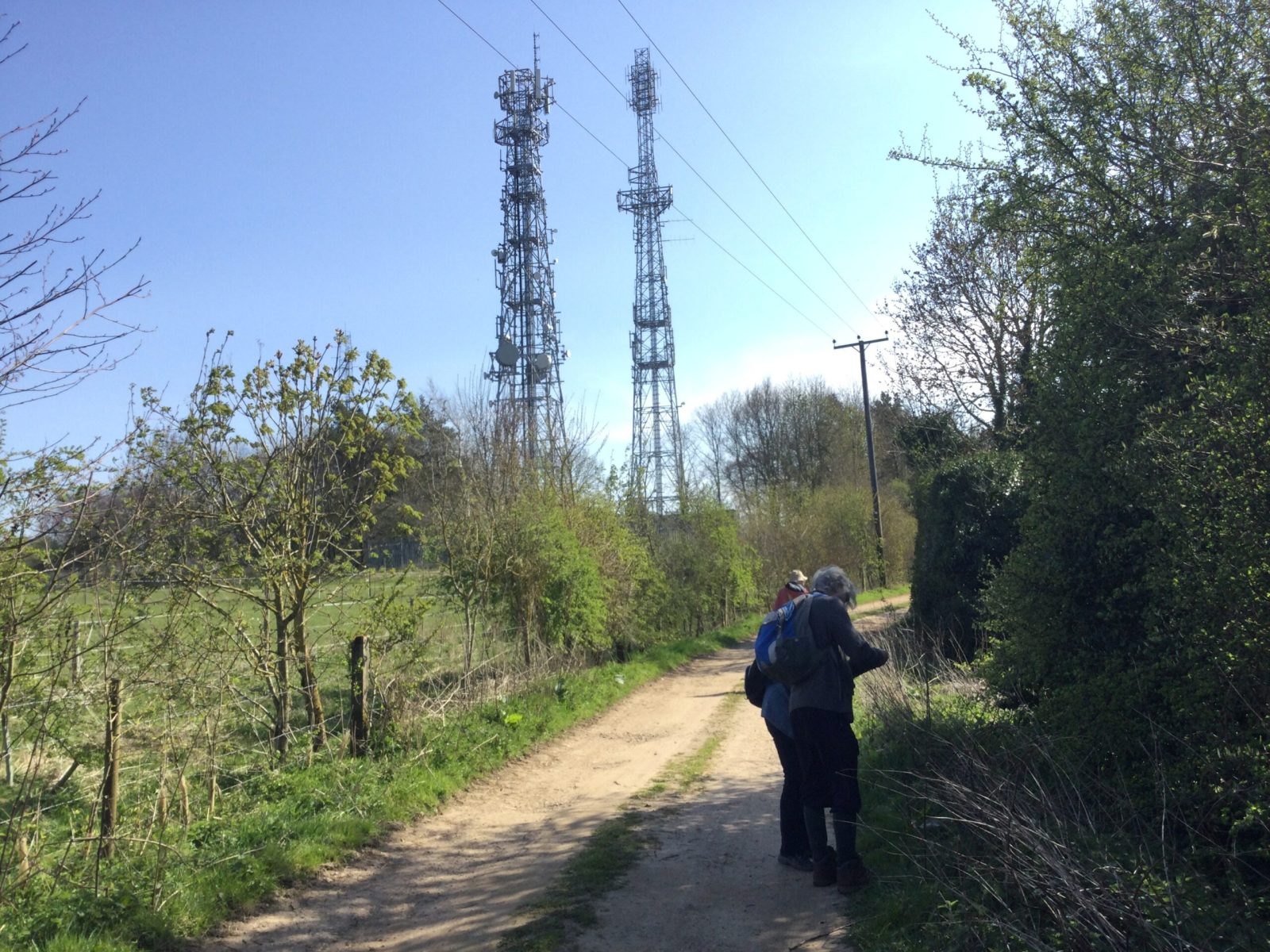
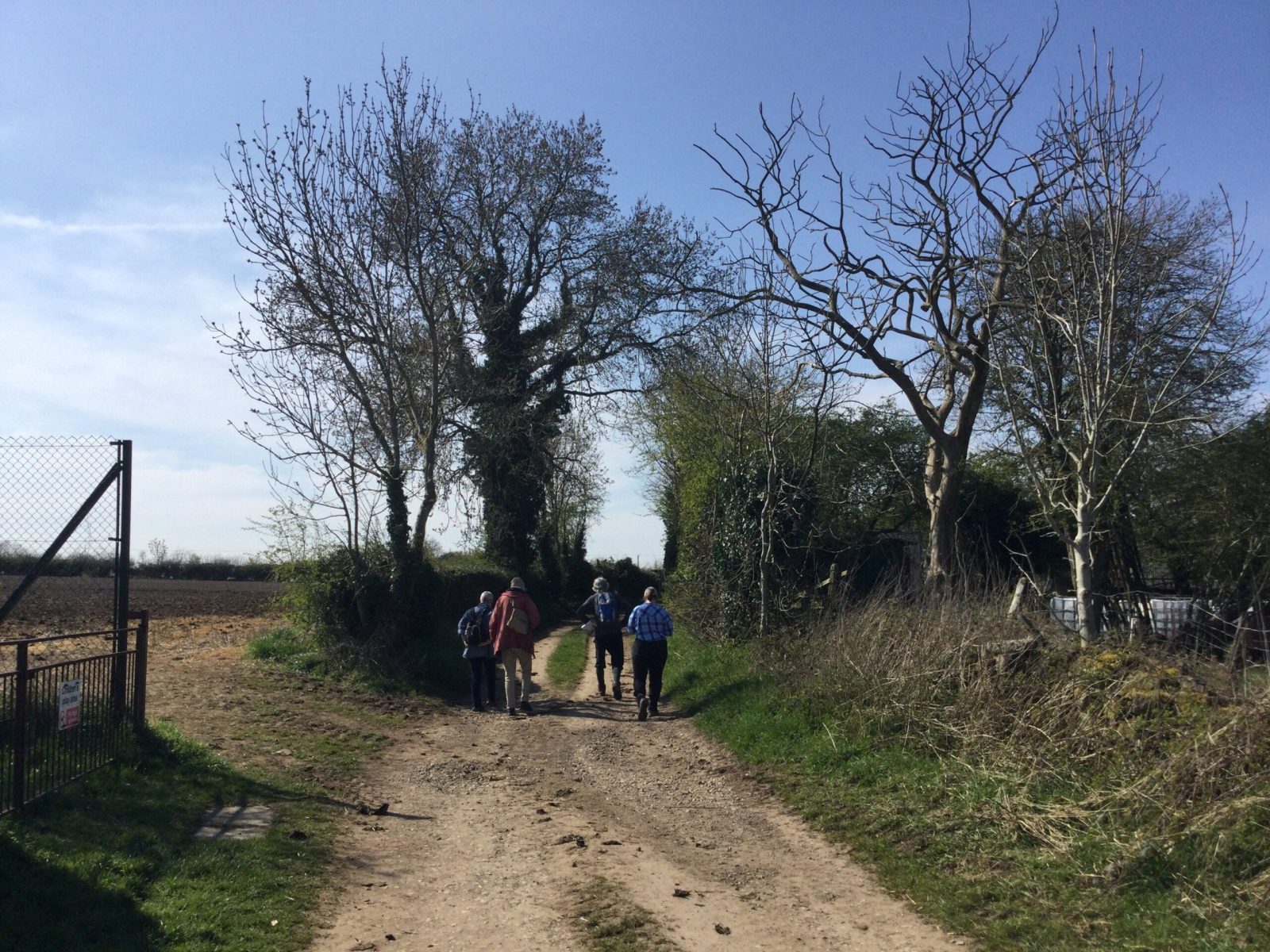
Louise & Tim, who had walked in from the adjacent village of Micklebring, south of the M18, elected to keep walking the network of Conisbrough Parks public footpaths and do a circuit of the site before returning to Micklebring. The rest of us took the short walk south along the limestone ridge past Clifton Beacon Radio masts at an altitude of *144 metres (472 feet) and on to the steep west-facing grassland (highlighted as a Nature Reserve on some maps) now heavily colonised by Hawthorns, Willows, and Cotoneaster shrubs and down to the excavated pond at the bottom of the field (SK517 956). This constituted a short stroll with a round trip of just over 1 mile.
Notes from Field notebook entries –
Invertebrates: The bright spring sunshine had brought out several queen bumblebees including the red-tailed Bombus pratorum and Bombus lapidarius and the white-tailed Bombus terrestris. Prospecting exposures of carboniferous clay was the Tawny Mining Bee Andrena fulva.
Butterflies on the wing were Speckled Wood (in woodland along the ridge), Small Tortoiseshell, Peacock, Small White along the nettle-rich hedgerows and grassland by the lane. 7-Spot Ladybird Coccinella septempunctata. Various Drone flies including Eristalis tenax were out of hibernation and a Bee fly Bombylius major was prospecting for hymenopteran breeding holes in which to deposit its eggs.
Vegetation: In the hedgerows – (Trees & Shrubs) Ash Fraxinus excelsior, Hawthorn Crataegus monogyna, Elder Sambucus nigra, Blackthorn Prunus spinose, Dogwood Cornus sanguinea, Dog Rose Rosa canina, Honeysuckle Lonicera periclymenium, Ivy Hedera helix.
(Herbage) Dog’s Mercury Mercurialis perennis, Wild Arum Arum maculatum, Lesser Celandine Ficaria verna.
(Ruderals) Cow Parsley, Hogweed, Common Nettle, Garlic Mustard Alliatia petiolate, Lesser Burdock Arctium minus, Broad Dock Rumex obtusifolius, Common Mallow Malva sylvestris, Prickly Sow-thistle Sonchus asper, Creeping Thistle Cirsium arvense, Spear Thistle Cirsium vulgare, Red Deadnettle Lamium purpureum, White Deadnettle Lamium album, Hoary Cress Lepidium draba, Germander Speedwell Veronica chamaedrys, Common Field Speedwell Veronica persica, Ground Ivy Glechoma hederacea, Clevers Galium aparine, Shepherd’s Purse Capsella bursa-pastoris, Groundsel Senecio vulgaris, Chickweed Stellaria media.
Birds: Demonstrating the changes of the seasons, Louise noted a flock of 20+ Fieldfares representing the last of the winter migrants, while Les noted, what was his first summer sighting of Swallows (over Clifton Village) and on the approach to the village when arriving, also Chiffchaffs (in the ridge woodland) representing incoming summer migrants.
Other birds noted [S = singing, thus holding territory] were Song Thrush (S), Blackbird (S), Robin (S), Wren (S), Chaffinch (S), Bluetit (S), Great Tit (S), Pheasant calling, Starling, Magpie, Carrion Crow, 4 Linnet & Greenfinch (in the steep grassy field), Wood Pigeon, Feral Pigeon, Collared Dove (in Clifton village), Moorhen (by the pond), Sparrowhawk, sitting on a fence by the play area, before flying off, & Common Buzzard.
Molluscs associated with the limestone slabs cast to the edged of arable fields along Beacon Lane were White-lipped Snail Cepaea hortensis, Common Garden Snail Cornu aspersum (formerly Helix aspersa) and Kentish Garden Snail Monacha cantiana.
Steep Grassy Field (SK5195 possibly a nature reserve) – Cowslip Primula veris, Tor Grass Brachypodium pinnatum, Crested Dog-tail Cynosurus cristatus, Hard Rush Carex inflexus, Colt’s foot Tussilago farfara, Daisy Bellis perennis, Common Ragwort Jacobaea vulgaris, Yarrow Achillea millefolium, Hawthorn Crataegus monogyna, Goat Willow Salix caprea, Cotoneaster sp.
Rosette Galls on a Goat Willow indicated the presence of the Cecidomyiid Fly Rhabdophaga rosaria.
Mammal species included Mole (many mole hills), Rabbit, Stoat and Fox (scent).
A possible reason for the invasion of even-age shrub development could be due a synchronous but temporary removal some years ago of the rabbit population by disease (possibly by Myxomatosis or some hemorrhagic pathogen). It could also have been due to the removal of grazing livestock such as cattle or sheep.
Pond – Reedmace Typha latifolia, a Broad-leaved Potamogeton sp. and a grey sedge possibly Carnation Sedge Carex panacea.
Social History:
On looking across to Micklebring, Les reminisced that in his youth he had been a keen club cyclist and after 10 mile time trials out to Tickhill the club used to gather for refreshment at the Plough, Micklebring. Jim, referring to the origins of the the place name, Micklebring, quoted an old saying, “many a mickles makes a muckle”.1
Another aspect of social history relating to Micklebring can be found at :
https://www.tickhillhistorysociety.org.uk/the-ruddle-pit
Correction and apologia:
- Please ignore the altitude of 46 metres as noted on the advert for this outing (so much for pulling data from the internet without the necessary fact checks). https://www.cucaera.co.uk/grp/ gives a more realistic altitude of 144m (472feet) for SK5190 9588. Curiously, this is the same height as for the Trig Point on Fordoles Head Lane overlooking the M18 near Maltby which is universally (but perhaps erroneously) quoted as the highest point in the Doncaster Met Borough.
- Also there ought to be an OS Triangulation point at Clifton Beacon. Perhaps we should campaign for one to be developed as a public outlook.
- And why isn’t there a weather station up here?
CAH.
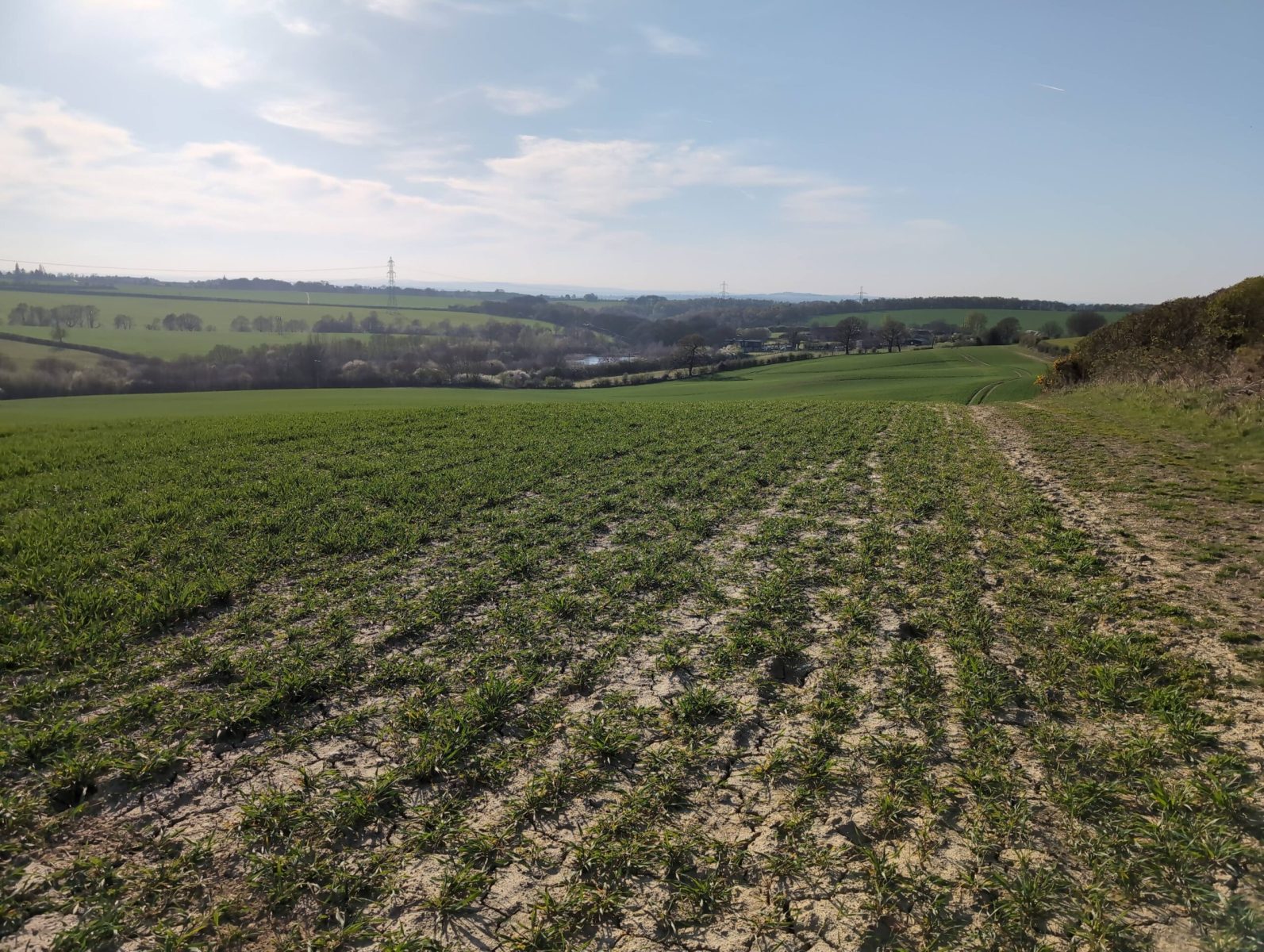
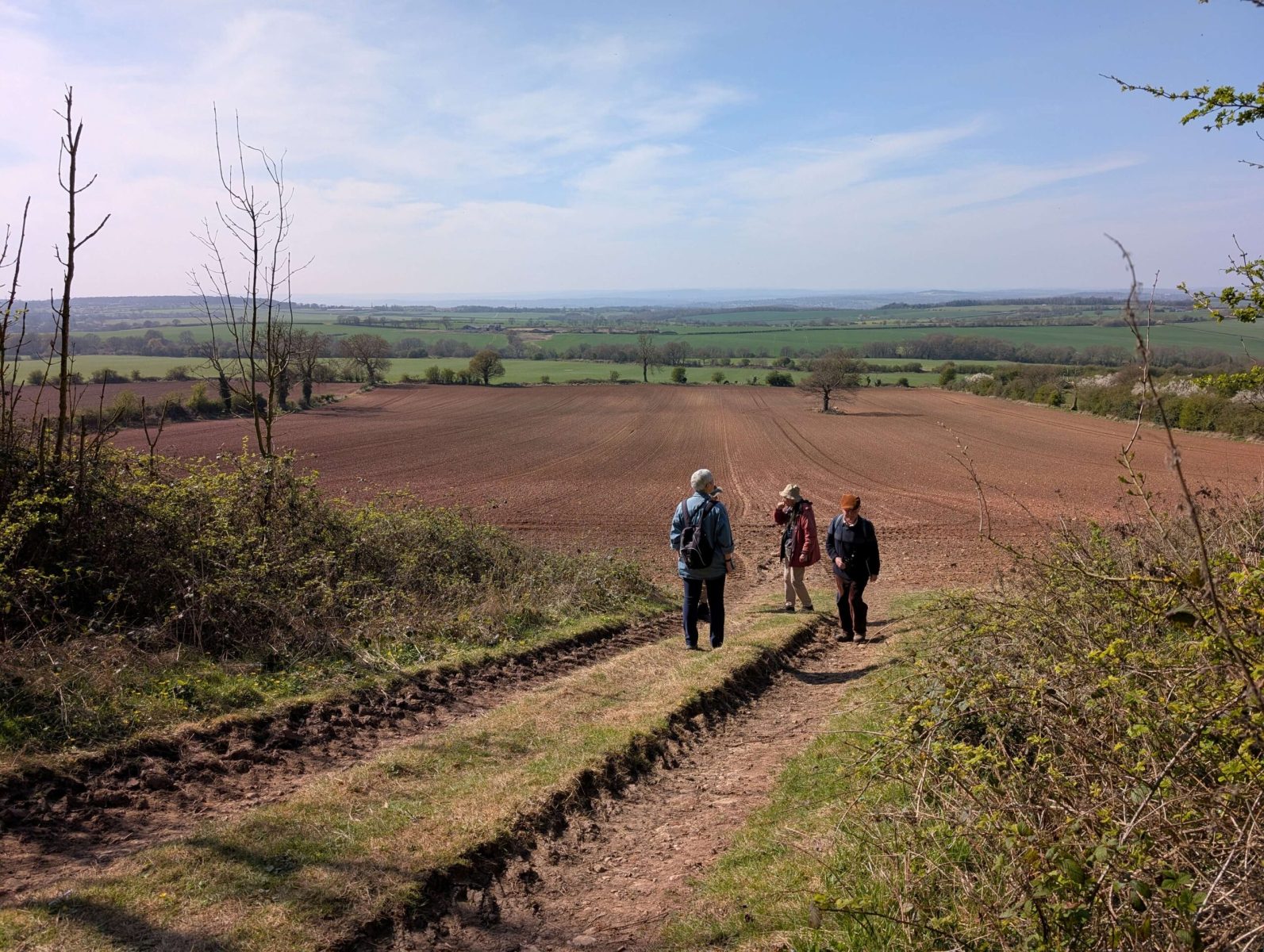
Our route took us down from the village to an underpass beneath the M18 and up the hill to Clifton Beacon. On our way we passed freshly opened flowers of Primrose Primula vulgaris, and the shiny whorls of leaves of a hedge bedstraw Galium album in a field on the southern side of the underpass. There were also scattered clumps of cowslip Primula veris growing on the verge of the busy M18. Cowslips were also plentiful beside the footpath as it climbed up through the rough grassland to the Beacon.
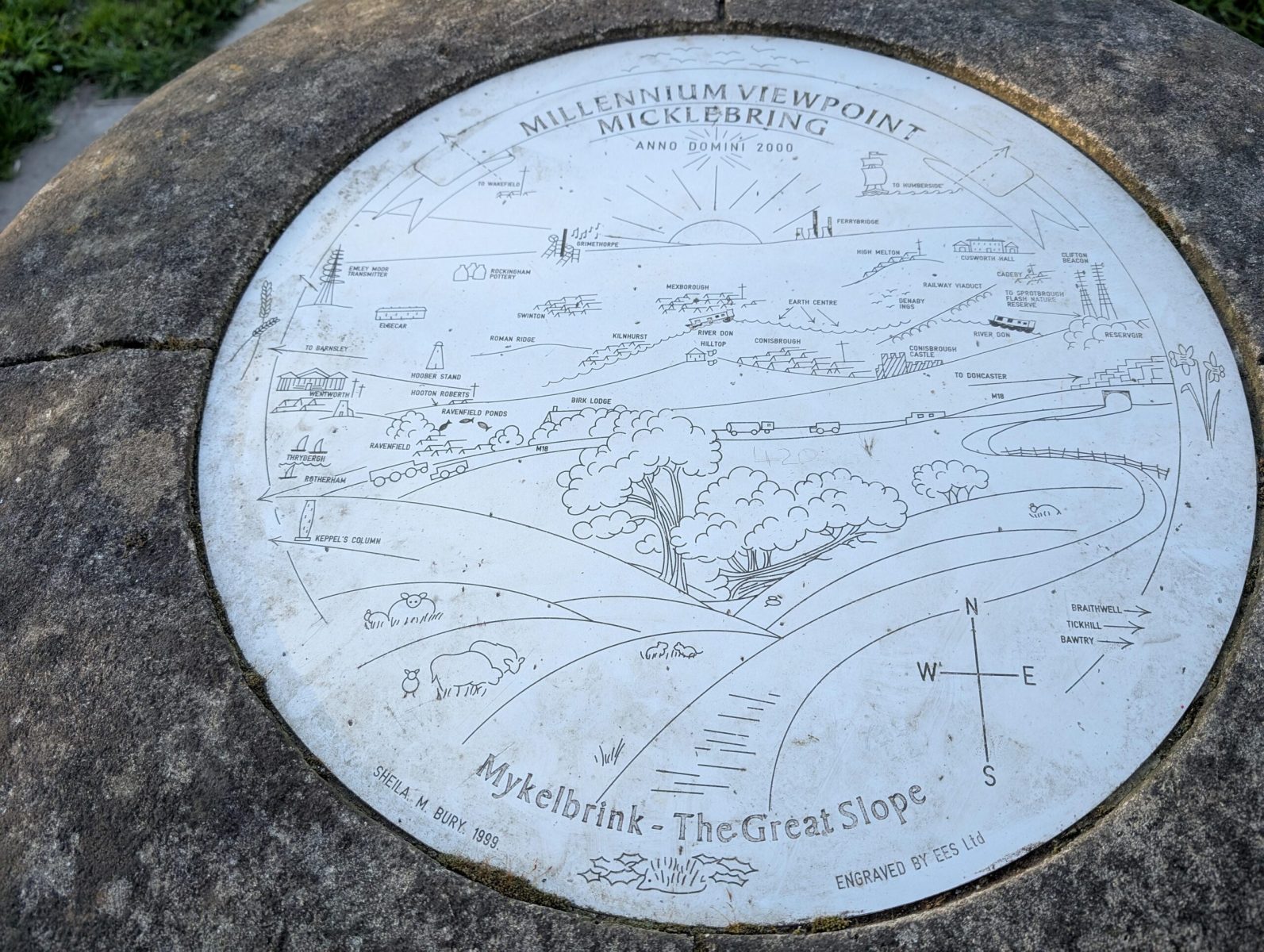
We had lunch overlooking the panoramic viewpoint just below the escarpment on the corner of Beacon Lane, observing a bin lorry leaving Parks Farm Cottages creating a huge a cloud of white dust on the dirt track, a pair of Peacock butterflies in mating flight and a stoat bounding along the field margin. We rendezvoused with the main party and, after a short discussion on the significance of this location (being the transition between the Magnesian Limestone and Coal Measures), we set off north to attempt a loop walk around Conisbrough Parks. The first few yards of the wooded footpath had a collection of limestone woodland herbs including common dog and early dog violets Viola riviniana and V. reichenbachiana) before we descended through horse fields on the footpath towards Parks Farm. A notable veteran coppiced specimen of field maple Acer campestre grows beside a small stream at the edge of the paddocks.
At Parks Farm the path takes a dog-log back across closely grazed sheep paddock to the disused railway and follows a lane past Clifton Gorse, appropriately clothed in the golden-flowered common gorse Ulex europaeus that gives that site its name. A glance to the south, beyond a gated continuation of the lane, indicated the presence of a new pond, possibly supporting the giant kingcup Caltha palustris subsp polypetala.
Our route continued to Conisbrough on the roads, crossing above Ashfield Brick Pit Geological SSSI in Conisbrough and descending to Kearsley Brook via the ‘terra nova’ of Pigotts Park, where we saw our first orange tip butterfly and red-tailed bumblebee of the Spring. Climbing up some improbably steep and glass-strewn steps to the top of Holywell Hill we then traversed along a dilapidated alleyway alongside the cricket Ground to emerge back on the pavement alongside the noisy and dusty Sheffield Road in order to reach our target of Park Lane. This lane has a hedge only on the western side. Blackthorn Prunus spinosa dominates with some limestone herbs such as wild arum Arum maculatum, dog’s mercury Mercurialis perennis and one or two plants of crosswort, but also an abundance of nitrophilous herbs including nettle Urtica dioica and cleaver Galium aparine.
Our route south-west across to Firsby left Park Lane just after the private side lane to Parks Farm Cottages and crossed over several rather bleak arable fields on a rough and cracked dry earth footpath before we reached a small brook that runs down to Frisby Hall Farm. The steep tree-lined western bank of the almost dry brook supported the only native flora for some distance, including bluebell Hyacinthoides non-scripta, wild angelica Angelica sylvestris and meadow sweet Filipendula ulmaria.
On reaching Firsby Reservoir, once part of the Doncaster Borough but now a local Nature Reserve managed by Rotherham MBC, we took an anticlockwise loop around the drained eastern reservoir past a small plant of western sword fern (Polystichum munitum) noted by Tim during a visit to the site a few weeks previously. We paused for a refreshing drink in the hot(!) spring sunshine on a metal bench (also with a plaque to commemorate the CRUSADE campaign) before heading east along the footpath towards Micklebring. This path follows a steep earth bank with abundant blackthorn and gorse, with unexpected damp sections supporting abundant meadowsweet, before leaving all traces of field boundaries behind to cross over exposed cereal fields towards the bridge over the disused railway. Passing a small wild cherry Prunus avium in full flower at the head of ‘The Brook’ we returned to the M18 underpass to climb the footpath back up to Greaves Sike Lane and our starting point and thence to Whitby’s for a well-earned fish supper.
Total distance Approx. 14km
Louise Hill & Tim Prosser
Note : –
In the book “Geology of Yorkshire” by Kendall & Wroot (1924), p. 242
…It was the work of Hutton and Playfair already referred to, and later of the splendid observation and thought of Sir Charles Lyell (1797-1875), to teach the geologist the truth of the proverb that “Mony mickles mak’ a muckle.”